
When I first stepped out of Cairo International Airport, the sheer wall of sound and heat hit me like a physical wave. Horns blared in a chaotic, rhythmic symphony, the smell of roasted cumin and exhaust fumes hung thick in the air, and the dust of millennia seemed to coat everything in a warm, golden haze. Cairo is not a city that asks for your permission; it simply sweeps you up in its frantic, brilliant momentum.
For many travelers, this city is a chaotic gateway to the ancient world—a wild, beautiful mess of soaring minarets, ancient tombs, and bumper-to-bumper traffic. Whether you are here to stand in the shadow of the last remaining Ancient Wonder of the World or to navigate the winding, spice-scented alleys of historic markets, this comprehensive Cairo Egypt travel guide will help you make sense of the madness. I have made the mistakes, paid the “tourist taxes,” and learned the ropes so you don’t have to.
Table of Contents
1. Arriving in Cairo: Connectivity, Visas, and Airport Survival
2. Standing Before Giants: The Giza Pyramids & Sphinx Visit
3. The Battle of the Museums: Tahrir, GEM, and NMEC
4. Exploring Historic Cairo: Islamic & Coptic Quarters
If you are planning a broader trip across the continent, don’t forget to check out our other Africa travel guides to help build your bucket list.
1. Arriving in Cairo: Connectivity, Visas, and Airport Survival
Landing in Cairo can feel overwhelming. Before you even get to the passport control desk, you need to sort out your entry visa. For most international travelers, you can buy a single-entry tourist Visa on Arrival (VoA) for USD $25.
Pro-tip: You must pay this $25 in cash. There are bank kiosks right before the passport queues where you buy the visa sticker. Keep exact change handy to keep the process moving quickly.
Getting Connected: eSIMs vs. Local SIM Cards
Do not leave the airport without a working data connection. You will need it to call rides, check prices, and navigate the city. You have two main routes for this:
- eSIM Options: If your phone supports it, buying an eSIM online before you land (via providers like Airalo or Holafly) is incredibly convenient. It saves you from waiting in long airport lines, though it is slightly more expensive per gigabyte.
- Local SIM Cards: Right inside the arrivals hall, you will find booths for Egypt’s primary mobile operators: Vodafone, Orange, and WE. I highly recommend buying a physical SIM card here. WE often has the cheapest rates, but Vodafone offers the most consistent coverage across Egypt. Expect to pay around $10 to $15 USD for a generous local data package. Bring your passport, as they must scan it to register the SIM.
Escaping the Airport: Uber vs. Airport Taxis
The moment you step out of the terminal doors, you will be swarmed by taxi drivers offering “cheap” rides. Do not use them. These drivers are notorious for aggressive pricing, hidden fees, and scamming first-time arrivals.
Instead, use ride-hailing apps like Uber or Careem (the Middle Eastern equivalent). They are cheap, transparent, and keep a GPS record of your trip.
To use them at the airport, order your ride while still inside using the airport Wi-Fi or your new SIM. The app will direct you to a specific parking lot or pickup lane (usually across the street from the main terminal exit). It might feel a bit chaotic finding your driver in the crowded parking garage, but it is vastly safer and cheaper than negotiating with the taxi touts.
2. Standing Before Giants: The Giza Pyramids & Sphinx Visit
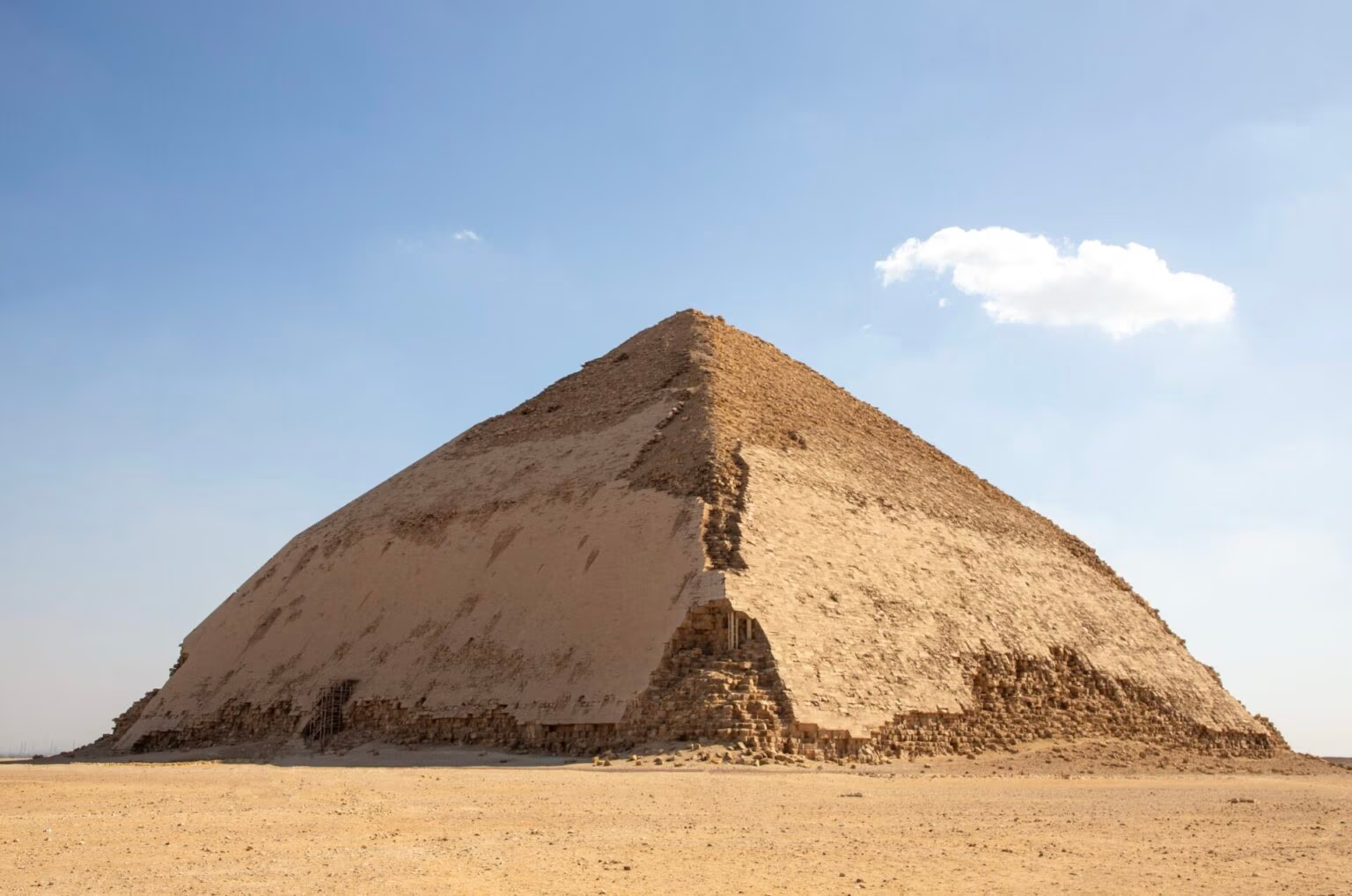
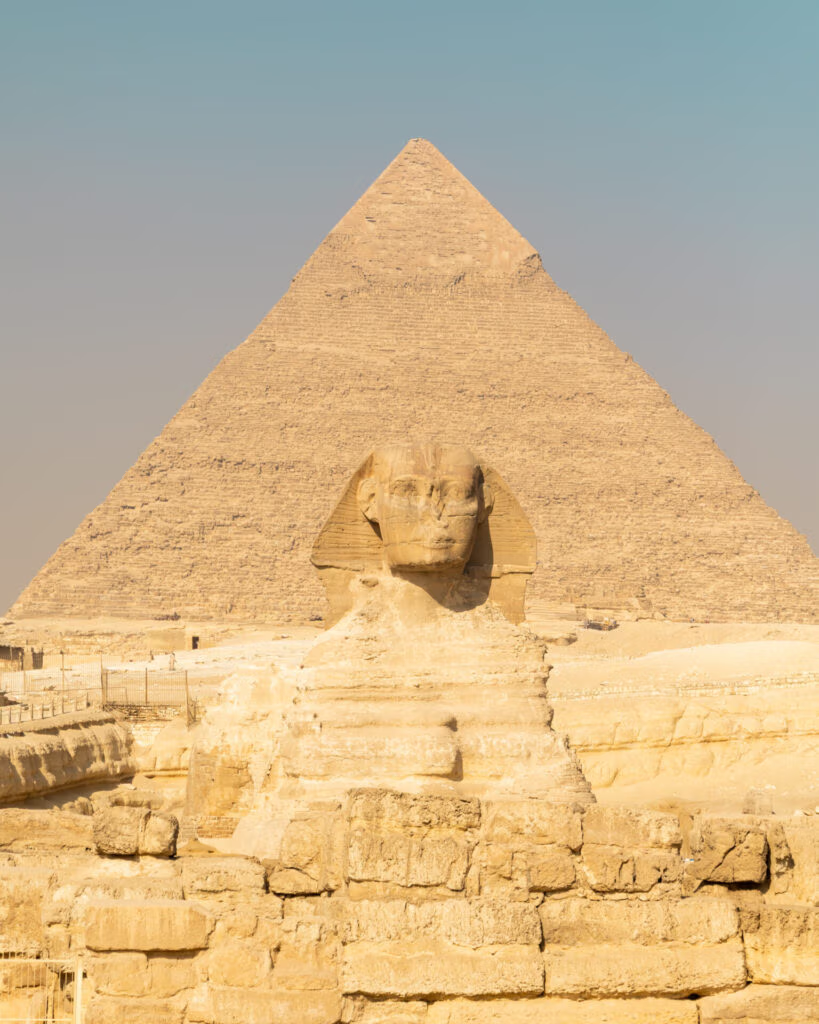
No matter how many photos you have seen, nothing prepares you for the sheer scale of the Giza pyramids. Seeing them rise out of the haze on the edge of the desert is a moment that sticks with you forever. However, the experience can easily be ruined by pushy vendors, intense heat, and confusing rules if you don’t go prepared.
Crucial Update: The Mandatory Cashless System
This is the most critical update for any modern traveler heading to Giza: the ticket offices at the pyramids are now completely cashless. You cannot pay for your entry ticket, pyramid interior tickets, or camera passes using Egyptian Pounds cash. You must bring a valid credit or debit card.
Make sure your card is active for international transactions before you arrive. If you bring cash, you will be forced to buy tickets from authorized third-party guides at a massive markup, or walk away empty-handed.
Navigating the Complex and the Sphinx Visit
The plateau is massive, and you will do a lot of walking. Here is how to make the most of your Sphinx visit and pyramid exploration without losing your mind:
- Arrive Early: The gates typically open at 7:00 AM or 8:00 AM depending on the season. Arriving at opening time lets you beat the tourist buses and the scorching midday heat.
- Avoid the “Ticket Checkers”: As you approach the entrance gates, men wearing official-looking lanyards may stop your car or walk up to you claiming they need to check your ticket. They do not work for the government. They are private tour operators trying to steer you toward horse carriage rides or camel stables. Keep walking directly to the official metal detector gate.
- The Inside Track: You can pay an extra fee to go inside the Great Pyramid of Khufu. Be warned: it is hot, humid, cramped, and requires climbing up a steep, narrow wooden ramp in a low-ceilinged shaft. If you suffer from claustrophobia, skip it. The view from the outside is spectacular enough.
- The Classic Sphinx Photo: The Sphinx sits lower down the plateau, near the Valley Temple. Walk through the temple ruin to access the viewing platform that runs parallel to the Sphinx’s flank. This is the best spot for clean photos without crowds of people blocking your view.
Dealing with Touts and Camel Scams
The Giza Plateau is a hotspot for high-pressure sales. You will be offered camel rides, horse carriage tours, headscarves, and “free” gifts every ten steps.
If you want a camel ride, negotiate the price beforehand and make sure it is clearly understood that the price is for the *whole ride*, not per minute, and includes getting back down. The government has set official rates for carriage and camel rides near the ticket office—look for the signs and point to them if someone tries to overcharge you. If you are not interested, a firm, polite “La, Shukran” (No, thank you) paired with direct eye contact and a steady stride is your best defense.
3. The Battle of the Museums: Tahrir, GEM, and NMEC
For decades, the story of Egypt’s relics was simple: you went to the dusty, pink-walled building in Tahrir Square and saw everything. Today, the museum landscape in Cairo is split across three major institutions. Knowing which museum holds what you want to see is essential for planning your time.
| Museum Name | Key Highlights | Current Status & Location |
|---|---|---|
| The Egyptian Museum (Tahrir) | King Tutankhamun’s gold mask, colossal statues, thousands of smaller relics. | Fully open. Located in Downtown Cairo (Tahrir Square). Cashless tickets available at the door. |
| NMEC (National Museum of Egyptian Civilization) | The Royal Mummies Hall, chronicling ancient history through modern Egypt. | Fully open. Located in Fustat (Old Cairo). Modern, climate-controlled, and highly organized. |
| Grand Egyptian Museum (GEM) | The complete Tutankhamun collection (once fully open), massive atrium, Ramesses II statue. | Soft Opening Status. Only the main hall, commercial area, and gardens are accessible via special tours. Near Giza. |
Clarifying the Royal Mummies Location
Many travelers arrive at the historic Egyptian Museum in Tahrir Square expecting to see the famous bodies of Egypt’s greatest pharaohs, including Hatshepsut and Ramesses II.
They are no longer there. In 2021, these royal remains were moved in a lavish, televised parade across Cairo to their new home at the National Museum of Egyptian Civilization (NMEC). If you want to see the mummies in an incredibly respectful, subterranean chamber designed to look like the Valley of the Kings, you must visit NMEC in Fustat.
The Classic Egyptian Museum (Tahrir Square)
Even though many treasures have moved, the original 1902 museum in Tahrir Square remains a must-visit. It has an chaotic, old-school charm that feels like stepping into an Indiana Jones film. Dusty glass display cases are packed with thousands of statuettes, sarcophagi, and papyri. Best of all, King Tutankhamun’s iconic solid-gold funerary mask and his inner coffins are still housed here in a special, high-security room while the GEM prepares its full exhibition halls.
The Grand Egyptian Museum (GEM) Update
The highly anticipated Grand Egyptian Museum, located right next to the Giza Plateau, is set to be the largest archaeological museum complex in the world.
As of late 2023 and moving into 2024, the GEM is in a state of a “soft opening.” While the main exhibition galleries (including the full King Tut collection) remain closed to the public, you can book limited-access tickets online. These tickets allow you to enter the breathtaking, sun-drenched main atrium, stand before the towering 3,200-year-old statue of Ramesses the Great, view the grand staircase, and explore the museum’s external gardens and commercial spaces. If you are a history buff, booking an architectural tour of the GEM is absolutely worth the price, even in its partial state.
4. Exploring Historic Cairo: Islamic & Coptic Quarters
While the pyramids represent the deep, ancient past, Cairo’s heart beats in its medieval neighborhoods. To truly experience the city, you must leave the desert behind and dive into the historic core.
Khan el-Khalili & Islamic Cairo
Islamic Cairo is a dense, labyrinthine district filled with medieval mosques, historic palaces, and the legendary Khan el-Khalili bazaar.
Visiting the bazaar is a sensory assault in the best possible way. The narrow stone lanes are packed with stalls selling hand-hammered copper plates, stained-glass lanterns, aromatic spices, and silver jewelry.
When you need a break from the bartering, seek out El Fishawy, one of Cairo’s oldest coffeehouses. It has been serving mint tea and strong Turkish coffee continuously for over two centuries. Sit back on a worn wooden chair, watch the locals debate politics over shisha, and soak in the atmosphere.
A short walk from the bazaar lies the stunning Salah El-Din Al-Ayouby Citadel. Perched high on a limestone hill, this medieval fortress offers sweeping views of the entire city. On a clear day, you can see the distant silhouettes of the Giza Pyramids rising above the city smog. Inside the fortress walls, the towering Mosque of Muhammad Ali dominates the skyline with its classic Ottoman-style domes.
Finding Peace in Coptic Cairo
If Islamic Cairo is a roaring engine, Coptic Cairo is a quiet sigh of relief. This peaceful, mostly pedestrian enclave is the historic heart of Egypt’s Christian community, dating back to the Roman era.
Walk down its quiet, high-walled stone alleys to find the iconic Hanging Church (built over the gatehouse of a Roman fortress) and the Church of St. Sergius and Bacchus, where local tradition says the Holy Family hid during their flight into Egypt. The atmosphere here is serene, offering a sharp, welcome contrast to the rest of the city’s frantic energy.
For more inspiration on navigating historic, high-energy cities, you can read our Hanoi travel guide to see how Cairo’s traffic compares to Southeast Asia’s scooter culture!
5. Cairo Tips: Safety, Tipping, and Getting Around
To have a great trip to Cairo, you need to understand how the city works on a practical level. Here are the essential survival tips that will save your sanity and your wallet.
The Art of Tipping (Baksheesh)
In Egypt, tipping is not just a reward for good service—it is a deeply embedded social custom known as Baksheesh. Wages for service workers are incredibly low, and tipping is how people make a living.
You will need a steady supply of small-denomination Egyptian Pound notes (10, 20, and 50 EGP bills). Keep these in an easily accessible pocket so you don’t have to pull out a thick wallet in public. You will find yourself giving baksheesh to:
- Bathroom attendants (keep coins handy for toilet paper).
- Luggage handlers and hotel staff.
- Drivers and local guides.
- Temple guardians who point out hidden carvings or offer to take your photo (never hand them your phone or camera unless you are prepared to tip them).
Navigating the Traffic
Crossing the street in Cairo is an extreme sport. Cars rarely stop for pedestrians, and traffic lights are treated as mere suggestions.
The secret to surviving? Find a local and shadow them. When they walk, you walk. Keep a steady pace, don’t make sudden stops or runs, and let the drivers calculate their path around you.
For longer journeys across the city, the Cairo metro map is surprisingly easy to use and incredibly cheap. It is the best way to bypass the gridlocked above-ground traffic during rush hour. The metro features designated cars for women, which female travelers should take advantage of for a more comfortable ride.
Safety Tips for Cairo Egypt travel guide
Cairo is generally a very safe city regarding violent crime, but petty theft, pickpocketing, and scams are common in tourist areas. Keep your valuables close in crowded spots like markets and train stations.
For solo female travelers, persistent male attention and catcalling can be exhausting. To minimize this, dress conservatively (covering shoulders and knees), wear sunglasses to avoid direct eye contact, and use ride-hailing apps rather than hailing street cabs late at night.
6. Where to Stay, What to Eat, and Local Bites
After a long day of navigating ancient dust and dodging roaring scooters, you need a comfortable place to recharge and a hearty meal to restore your energy.
Where to Stay in Cairo
Your choice of neighborhood will define your entire trip. Here are the three best areas to base yourself:
- Zamalek: This leafy, upscale island in the middle of the Nile River is the safest and most relaxed neighborhood in Cairo. It is packed with trendy cafes, fine-dining restaurants, and international embassies. If you want a quiet escape from the city’s noise, stay here.
- Downtown: Ideal for budget travelers and history buffs. It features grand 19th-century European-style architecture, classic cafes, and is within walking distance of the Tahrir Square Museum. It is noisy and chaotic, but incredibly central.
- Giza: If your dream is to wake up, open your balcony doors, and look directly at the pyramids, book a hotel in Giza. While the views are unmatched, keep in mind that Giza is far from Cairo’s best restaurants, nightlife, and historic neighborhoods.
Must-Try Egyptian Street Food
Egyptian cuisine is hearty, flavorful, and incredibly cheap. You cannot leave the city without trying these local staples:
Koshary: This is Egypt’s ultimate comfort food and national dish. It is a carb-loaded mix of macaroni, rice, black lentils, and chickpeas, topped with a thick, spicy tomato sauce, garlic vinegar, and a generous handful of crispy fried onions. It sounds bizarre, but it is delicious, filling, and costs less than two dollars. Head to the famous Koshary Abou Tarek in downtown Cairo for the quintessential experience.
Ta’ameya (Egyptian Falafel): Unlike Levantine falafel made with chickpeas, Egyptian ta’ameya is made from crushed fava beans mixed with fresh coriander, parsley, and dill, then fried to a golden, crispy finish. It is lighter, fluffier, and greener inside than traditional falafel. Grab a few stuffed into warm baladi flatbread with tahini and salad for a perfect, quick breakfast.
To end your evening in true Cairene fashion, book a sunset Nile River cruise on a traditional wooden felucca sailboat. As the sails catch the evening breeze, watch the glowing city lights of Cairo’s skyline reflect off the ancient dark waters, letting the peaceful silence wash over you after a wild day of exploration.
If you’re looking for more inspiration on how to explore world-famous landmarks on a budget, check out our travel homepage for destination guides spanning every corner of the globe.
Frequently Asked Questions About Cairo Travel
How many days should I spend in Cairo?
A minimum of 3 days is ideal to see the main highlights, including the Pyramids of Giza, the major museums, Coptic and Islamic Cairo, and Khan el-Khalili Bazaar.
Is Cairo safe for solo female travelers?
Cairo is generally safe, but solo female travelers may experience persistent attention or street harassment. Dressing conservatively, hiring reputable local guides, and using Uber rather than street taxis are highly recommended safety measures.
What is the best month to visit Cairo?
The best time to visit Cairo is during the cooler months from October to April, when temperatures are pleasant for outdoor sightseeing.
Can you drink the tap water in Cairo?
No, it is highly recommended to drink bottled, filtered, or treated water during your stay in Cairo to avoid stomach illnesses.
Do I need a visa to visit Cairo, Egypt?
Most international travelers can obtain a single-entry tourist Visa on Arrival (VoA) for USD $25 at Cairo International Airport, or apply for an e-Visa online prior to departure.