
Let’s be brutally honest. Planning a trip to the French capital can be incredibly overwhelming. You search for a reliable Paris travel guide, and what do you find? Generic lists telling you to “eat a croissant” and “visit the Eiffel Tower.” Thanks, internet. We never would have guessed.
Old blogs gloss over the frustrating logistics. They ignore the permanent infrastructure changes made after the massive 2024 events. They definitely do not warn you about the new 2026 reality of mandatory timed-entry tickets that sell out weeks in advance.
You need a Paris travel guide that actually helps you survive and thrive in the city. You need real, actionable intelligence. How do you get from Charles de Gaulle airport to your hotel without getting ripped off? Which neighborhoods actually match your travel style? What are the exact things to do in Paris that will not leave you standing in a three-hour line?
This is your comprehensive, hyper-specific, no-nonsense Paris travel guide. We are breaking down the exact timelines, booking hacks, and local secrets you need to know. Grab an espresso. Let’s get to work.
Table of Contents
1. The Post-2024 Reality: What to Expect in 2026
2. Quick Pre-Trip Checklist & Essential Apps
3. When to Visit: Weather, Crowds, and Prices
4. Navigating the Arrondissements: Where to Stay
5. Top Things to Do (And Skip-the-Line Hacks)
6. The Food Scene: Beyond Basic Baguettes
7. Getting Around: Mastering the Paris Metro
8. Common Scams and How to Avoid Them
1. The Post-2024 Reality: What to Expect in 2026
If you are reading an older Paris travel guide, throw it out. The city underwent massive infrastructure shifts for the 2024 Summer Games, and those changes are now permanent fixtures in 2026.
First, central Paris is far more pedestrian-friendly. Massive zones around the Seine and central arrondissements restrict heavy vehicle traffic. This is phenomenal for walking, but it means relying on Uber to get everywhere is a terrible idea. You will sit in gridlock.
Second, prices surged in 2024 and never completely came back down. Attraction tickets, metro passes, and boutique hotels have established a new, higher baseline. A reliable Paris travel guide must acknowledge this. Budgeting properly is more important than ever.
Finally, the Metro system received incredible upgrades. Line 14 now stretches much further, connecting Orly Airport directly to the city center. This changes the entire dynamic of airport transfers, making Orly a highly attractive option for European flights.

2. Quick Pre-Trip Checklist & Essential Apps
Do not wait until your plane lands at Charles de Gaulle to figure out your phone situation. A great Paris travel guide starts weeks before departure.
Starting recently, non-EU visitors need to be aware of the ETIAS visa waiver program. Check your specific requirements well in advance to avoid boarding denial. Beyond paperwork, your digital toolbelt is your lifeline.
Download these apps before you leave home:
- Citymapper: Forget Google Maps for public transit. Citymapper is vastly superior in Paris. It tells you exactly which metro car to board so you are closest to your exit.
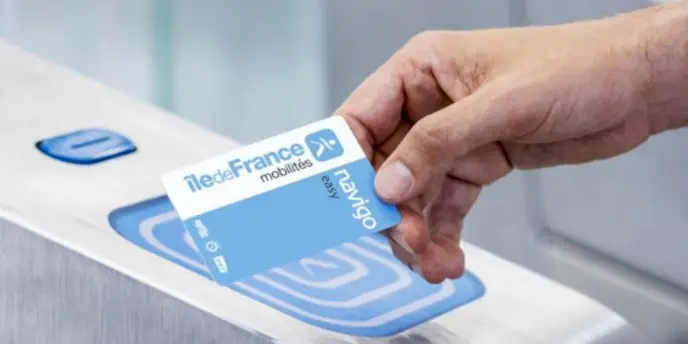
- Bonjour RATP: The official local transit app. You can buy and reload digital Navigo transit passes directly on your phone, skipping the massive lines at the station ticket machines.
- TheFork (La Fourchette): The European standard for restaurant reservations. Many spots offer 20% to 50% off your food bill if you book through the app.
- Google Translate: Download the French language pack for offline use. Point your camera at a menu, and it translates instantly.
3. When to Visit: Weather, Crowds, and Prices
Every Paris travel guide has a different opinion on the best time to go. The truth? It entirely depends on your tolerance for crowds versus your desire for warm weather.
Let’s break down the seasonal reality of Paris in 2026.
- Spring (April – May): The classic choice. The cherry blossoms are blooming, and café terraces open up. However, May has numerous public holidays. Expect random closures and dense crowds.
- Summer (June – August): Peak tourist season. It gets intensely hot, and many older hotels do not have air conditioning. August is when locals abandon the city for the coast. Many independent shops close completely.
- Autumn (September – October): Arguably the absolute best time to visit. The weather is crisp, the light is gorgeous, and the summer tourist crush has faded. The fashion week crowd rolls in, making people-watching spectacular.
- Winter (November – March): Cold, damp, and gray. But this is when you score the cheapest flights and the quietest museums. If your goal is to spend hours inside the Louvre without being shoved, come in February.
4. Navigating the Arrondissements: Where to Stay
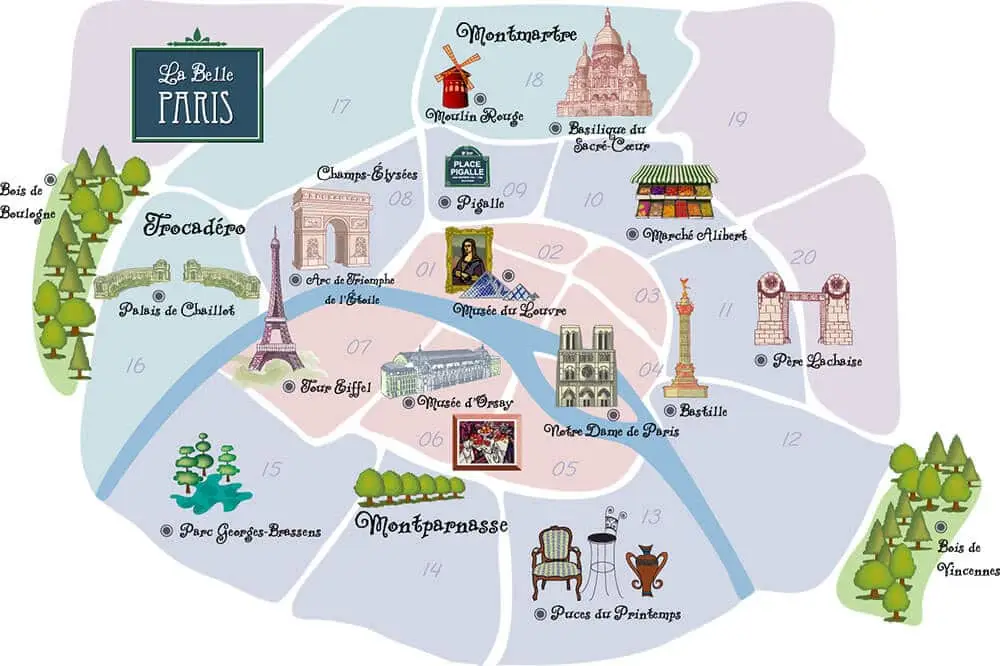
Paris is divided into 20 administrative districts called arrondissements, spiraling out from the center like a snail shell. Choosing the right one makes or breaks your trip. A top-tier Paris travel guide doesn’t just list them; it helps you pick.
Here is your cheat sheet to finding your perfect basecamp:
- Stay in Le Marais (3rd/4th) if: You love boutique shopping, incredible food, and cobblestone streets. It survived the 19th-century renovations, so it retains a medieval, intimate charm. It is also the hub of LGBTQ+ nightlife.
- Stay in Saint-Germain-des-Prés (6th) if: You want classic, literary Parisian charm. It is slightly more upscale, packed with historic cafés, and perfectly central. Ideal for first-timers who want a romantic vibe.
- Stay in the 7th Arrondissement if: You want to wake up and see the Iron Lady. This is a very quiet, residential, wealthy neighborhood. It offers spectacular views but lacks late-night dining options.
- Stay in Montmartre (18th) if: You want a bohemian village feel. It sits on a massive hill, meaning lots of stairs. It is highly photogenic but a bit far from central attractions like the Louvre or Notre-Dame.
Tourist Trap Warning: Avoid staying immediately next to the Champs-Élysées (8th). It is loud, aggressively overpriced, and filled mostly with international chain stores. You will not find the authentic local vibe there.
5. Top Things to Do (And Skip-the-Line Hacks)

Most lists covering things to do Paris focus on the “what.” This Paris travel guide focuses on the “how.” Because knowing how to get inside the building is half the battle.
The post-pandemic, post-Olympic reality is simple: Spontaneity is dead. If you show up to a major monument expecting to buy a ticket at the door, you will be turned away.
The “When to Book” Timeline Matrix
Keep this timeline handy to avoid heartbreak:
- 12 Weeks Out: Book your high-end Michelin-star restaurants.
- 8 Weeks Out: Secure tickets for the Eiffel Tower summit. They release exactly 60 days in advance and sell out in hours.
- 4 to 6 Weeks Out: Book timed-entry tickets for the Louvre, Versailles, and the Catacombs.
Eiffel Tower Tips
If you miss the 60-day booking window, do not panic. The official website often releases a small batch of tickets exactly one week prior. Alternatively, book a stair ticket. Walking up to the second floor is cheaper, the line is infinitely shorter, and you earn your dinner.
Mastering the Paris Museums
The Louvre Museum is massive. Do not use the main glass Pyramid entrance above ground; the security line is agonizing. Instead, take the Metro to the Palais Royal – Musée du Louvre station and enter through the underground Carrousel du Louvre mall. The security line here is a fraction of the wait.
Also, don’t just stare at the Mona Lisa. The best Paris museums often fly under the radar. The Musée d’Orsay offers incredible Impressionist art in a stunning converted train station. The Musée de l’Orangerie holds Monet’s massive water lily canvases in curved, naturally lit rooms.

6. The Food Scene: Beyond Basic Baguettes
Any basic Paris travel guide will tell you to eat a crepe. Let’s dig deeper. The culinary scene in 2026 is a brilliant mix of staunch traditionalism and a booming modern, dietary-friendly revolution.
Tourist Traps vs. Authentic Local Spots
Stop paying 12 euros for bad coffee. Famous spots like Café de Flore and Les Deux Magots are historically significant, but today, they are overpriced factories catering purely to tourists. You will rarely see a local sitting there.
Instead, walk five minutes away. Find Café de la Mairie in the 6th arrondissement. You get the exact same wicker-chair vibe, much better coffee, half the price, and you will actually hear French being spoken.
The Dietary Restriction Renaissance
Historically, asking for a vegan or gluten-free meal in France was met with a scoff. No longer. Paris has exploded with alternative dining options. Le Marais and the 11th arrondissement are packed with highly-rated plant-based bistros. For gluten-free travelers, bakeries like Noglu offer absolutely stellar completely safe croissants and pastries.
Dining Etiquette You Must Know
- Do not ask for modifications. Menus are designed by chefs who consider their dishes complete. Asking for substitutions is highly frowned upon.
- Water and bread are free. Ask for “une carafe d’eau” (a pitcher of tap water). If you just ask for “water,” they will bring you an expensive bottle of Evian.
- The bill will not be brought to you. You must explicitly ask for it (“L’addition, s’il vous plaît”). It is considered rude in France for a waiter to drop the check before you ask; it implies they are rushing you out.
7. Getting Around: Mastering the Paris Metro
A crucial component of any Paris travel guide is logistics. The Paris Metro is dense, efficient, and slightly intimidating. But once you understand the rules, the city opens up.
Airport Transfers: CDG to the City Center
When you land at Charles de Gaulle (CDG), you have three main options:
- The RER B Train: The fastest and most cost-effective method. Follow the signs for “Paris par Train.” Buy a specific airport ticket from the machines (standard metro tickets do not work). It takes about 45 minutes to reach Gare du Nord or Châtelet.
- Official Taxis: Follow the blue lines painted on the floor directly to the official taxi rank. Fares to the city center are rigidly fixed by law (expect around 55-65 euros depending on your side of the river).
- Uber/Bolt: Often more expensive than official taxis during surge hours, and finding the specific pickup zones in the massive CDG terminals can be a nightmare for first-timers.
Metro Ticket Rules
Physical paper tickets are rapidly being phased out. Use your Bonjour RATP app to load digital tickets onto your phone. If you do use a physical paper ticket, keep it until you exit the station. Transit police frequently run stings in the hallways. If you threw your ticket away after passing the turnstile, you will be slapped with an immediate, on-the-spot cash fine. No excuses accepted.
Always hold onto your belongings, stand on the right side of the escalators, and let passengers exit the train before you try to board.
8. Common Scams and How to Avoid Them
Paris is generally very safe regarding violent crime. However, petty theft and targeted scams are rampant in heavy tourist zones. A responsible Paris travel guide must prepare you for the street theater you will encounter.
Watch out for these specific hustles:
- The Petition Scam: Usually perpetrated by young girls pretending to be deaf. They thrust a clipboard into your face near the Eiffel Tower or the Seine. While you are distracted reading it, an accomplice is picking your pocket. Ignore them completely and keep walking.
- The Sacré-Cœur Bracelet Scam: As you walk up the stairs to Montmartre, aggressive men will try to tie a cheap string bracelet tightly around your wrist. Once it is tied, they aggressively demand payment. Keep your hands firmly in your pockets and firmly say “Non.”
- The Dropped Ring Scam: Someone bends down near you, picks up a “gold” ring, and asks if you dropped it. When you say no, they offer it to you anyway, claiming it is lucky, but then demand money for their “generosity.” Keep walking.
- The Metro Pickpocket Surge: Pickpockets operate in highly organized teams on Metro Line 1 and Line 4. When the warning buzzer sounds for the doors closing, a team will intentionally bump into you, grab your phone, and jump out the doors right before they seal, leaving you trapped on the moving train. Keep your phone out of your hands near the doors.
9. Building Your Perfect Paris Itinerary
How many days do you actually need? Every Paris travel guide debates this, but the mathematical truth is that four full days is the absolute minimum for a first-time visitor. Three days is a sprint; five days lets you breathe.
When drafting your personal Paris itinerary, cluster your activities geographically. Do not zigzag across the city. It wastes hours of precious time.
Sample Cluster Day: The Historic Core
Start your morning early at the Louvre. Cross the river via the Pont des Arts. Have lunch in the lively Saint-Germain neighborhood. Spend your afternoon wandering the Latin Quarter, viewing the Panthéon, and relaxing in the Luxembourg Gardens. End your evening with dinner near Notre-Dame to see the cathedral lit up at night.
Building a logical Paris itinerary means leaving room for the unexpected. Do not schedule every hour. The greatest joy of this city is simply sitting outside a café, ordering a glass of wine, and watching the world go by. A rigid spreadsheet kills the romance.
Rely on the data in this Paris travel guide to handle your bookings and logistics. Once those are secure, let the city dictate the rest of your adventure.
10. Frequently Asked Questions
Is Paris safe for solo female travelers?
Yes, absolutely. Paris is quite safe for solo travelers. Apply the same street smarts you would in New York or London. Avoid empty parks late at night, stay aware of your surroundings on the Metro, and ignore street catcallers. The biggest risk is pickpocketing, not physical danger.
Do I need to speak French to visit?
No, but making an effort is highly respected. You do not need to be fluent, but starting every interaction with a polite “Bonjour” (Good morning/hello) is absolutely mandatory in French culture. Failing to say it before asking a question is considered deeply rude. Learn basic pleasantries, and locals will happily switch to English.
How much should I tip in restaurants?
Service is legally included in the price of your meal in France (look for “service compris” on the receipt). You are not expected to add 20% like in the United States. However, leaving a small coin tip (1 to 2 euros) for good service at a café, or 5-10% for an exceptional dinner, is a nice gesture.
Can I drink the tap water in Paris?
Yes, the tap water in Paris is perfectly safe, delicious, and heavily treated. The city even provides hundreds of public water fountains—some of which actually dispense free sparkling water! Bring a refillable bottle and save your money.
What is the best way to get cash in Paris?
Avoid the independent “Euronet” ATMs scattered around tourist spots; they charge exorbitant exchange fees. Always use an ATM attached to a legitimate physical bank (like BNP Paribas or Société Générale). Furthermore, you barely need cash. In 2026, Paris is almost entirely a “tap-to-pay” society. Apple Pay and contactless cards work for 99% of transactions, including bakeries.
We hope this Paris travel guide provides the clarity and tactical advantages you need. Paris is a complex, sprawling, fiercely proud city. By avoiding the common traps and preparing your logistics in advance, you ensure your trip is memorable for all the right reasons. Check the official Paris Tourist Office for any emergency alerts right before your flight, pack comfortable walking shoes, and enjoy the journey.









5 Responses