
Let’s be completely honest. Getting to the Spice Islands is an absolute logistical nightmare. But is it worth it? Absolutely.
You are looking for a reliable Banda Islands travel guide because you’ve probably noticed something frustrating. Most blogs show you pretty drone photos but leave you high and dry when it comes to actual ferry schedules. That ends today. I wrote this comprehensive Banda Islands travel guide to solve the exact problems that ruin trips to this remote Indonesian paradise.
Imagine pristine coral reefs teeming with hammerhead sharks. Picture crumbling Dutch forts completely consumed by jungle roots. Visualize eating freshly caught yellowfin tuna while watching a volcano puff white smoke into the sky. This is Banda Neira. It is wild. It is beautiful. And it is completely isolated.
If you are an adventure traveler, a scuba fanatic, or a history buff hunting for Indonesia off beaten path, you have found the holy grail. This is the only Banda Islands travel guide you will ever need.
Table of Contents
- Quick Facts: What You Need to Know First
- The Ultimate Logistics Masterclass: How to Get to the Banda Islands
- Mistakes We Made Getting to Banda (Learn From Us)
- A Bloody History: Nutmeg, Fort Belgica & The Spice Islands
- What to Do in the Banda Islands by Traveler Type
- Island Hopping: Beyond Banda Neira
- Where to Stay & Eat in the Spice Islands
- Perfect Banda Islands Itineraries (5 and 7 Days)
- Your Custom Interactive Travelmapguide
- Frequently Asked Questions
Quick Facts: What You Need to Know First
Before reading the rest of this Banda Islands travel guide, you need to grasp the basics. Save these quick facts to your phone.
- Best Time to Visit: October to November, and March to May. The seas are flat. This is critical for boat crossings.
- Main Transport Hub: Ambon (AMQ). You must fly here first.
- Currency: Indonesian Rupiah (IDR). Bring plenty of cash. ATMs on Banda Neira frequently run out of money.
- WiFi & Connectivity: Telkomsel is the only reliable network. Buy a SIM card in Ambon before arriving. Do not expect fast internet.
- Primary Keyword Alert: Yes, reading a thorough Banda Islands travel guide is mandatory unless you want to get stranded in Ambon for a week.
The Ultimate Logistics Masterclass: How to Get to the Banda Islands
This is where every other Banda Islands travel guide fails. They tell you to “just catch a boat.” They don’t tell you the boats get canceled, the schedules change monthly, and the ticket websites constantly crash. Let’s fix that.
Step 1: Get to Ambon
Your journey begins in Ambon, the capital of Maluku province. Fly into Pattimura Airport (AMQ) from Jakarta, Bali, or Makassar. Airlines like Garuda Indonesia, Batik Air, and Lion Air operate these routes daily. This is the easy part.
Step 2: The Pelni Ferries vs. Express Bahari
Once in Ambon, you have two main boat options to reach Banda Neira.
Option A: The Pelni Ships (Nggapulu and Pangrango)
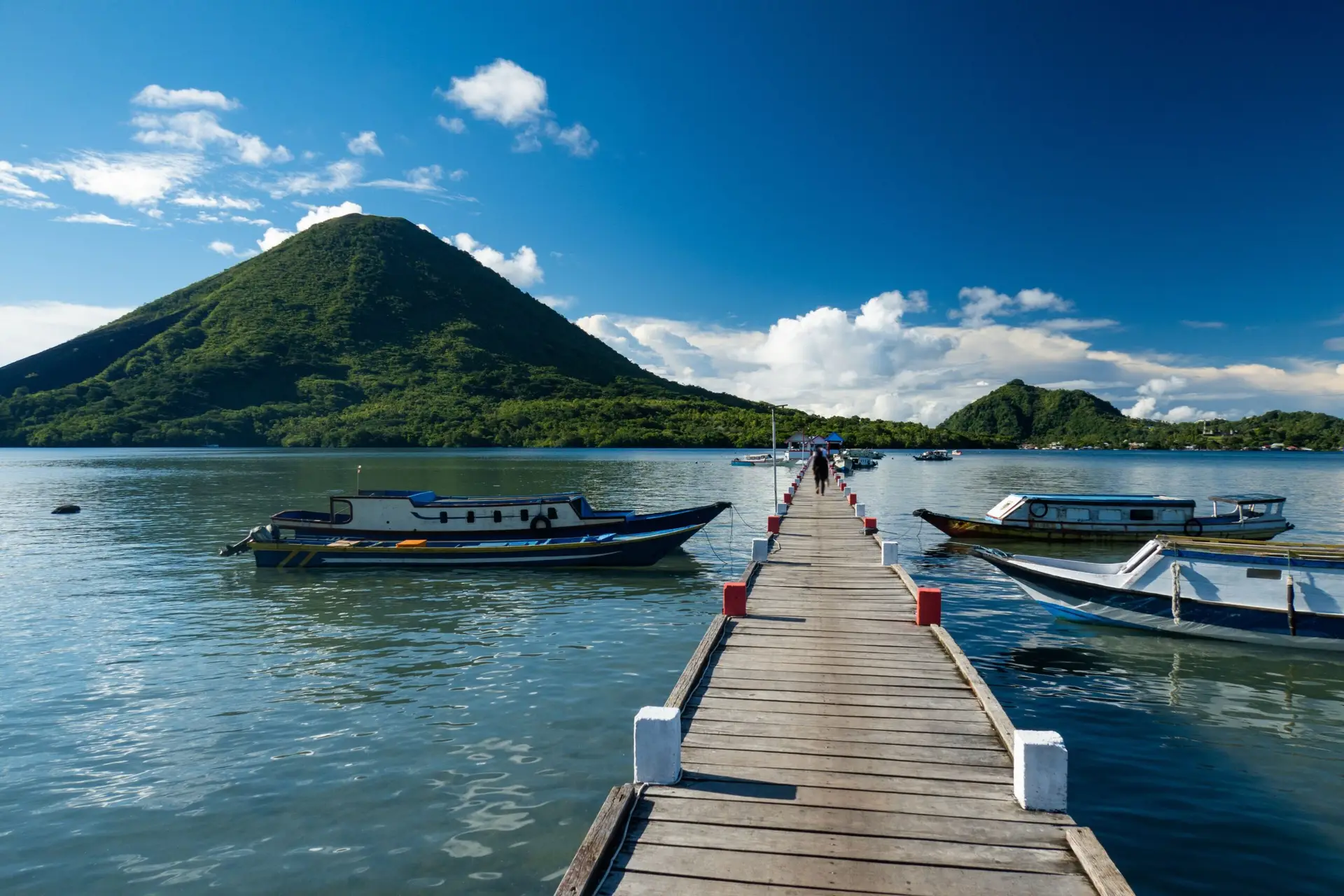
These are massive government-subsidized passenger ships. They are slow, cheap, and reliable in rough weather. The Nggapulu takes about 8 to 10 hours. The Pangrango takes up to 14 hours. The catch? They only run every two weeks. You must check the official Pelni website about three weeks before your trip. The schedule is never released months in advance. Tickets cost around 200,000 IDR ($13 USD).
Option B: Express Bahari Fast Boat
This is the preferred method for most travelers. It takes about 5 to 6 hours. Tickets run around 410,000 IDR ($26 USD) for VIP class. However, the fast boat only runs twice a week (typically Tuesdays and Saturdays from Ambon, and Wednesdays and Sundays returning from Banda). But wait. If the waves are higher than 2 meters, the harbormaster will cancel the boat. Period.
Step 3: What About Susi Air Flights?
You might read an outdated Banda Islands travel guide claiming you can fly from Ambon to Banda Neira on a tiny Susi Air Cessna. Do not rely on this. These flights are heavily subsidized, prioritize locals, only carry 12 passengers, and are canceled constantly due to weather or pilot availability. If you book one, consider it a lucky bonus, but always have a boat backup plan.
Mistakes We Made Getting to Banda (Learn From Us)
We want this to be the most honest Banda Islands travel guide on the internet. We messed up. Hard. Here is what happened.
We assumed we could buy Express Bahari tickets at the Ambon port on the morning of departure. Huge mistake. The boat was sold out to a massive local tour group. We were stranded in Ambon for four days waiting for the next crossing.
The Fix: Use a local contact. Many guesthouse owners in Banda Neira will secure fast boat tickets for you via WhatsApp a few days before the boat leaves. They charge a small commission (maybe 50,000 IDR), and it is worth every single penny. Reach out to your accommodation immediately after booking.
A Bloody History: Nutmeg, Fort Belgica & The Spice Islands
You cannot write a Banda Islands travel guide without talking about nutmeg. Four hundred years ago, these tiny volcanic specks were the only place on Earth where the nutmeg tree grew. That made Banda Islands Indonesia the most valuable real estate on the planet.
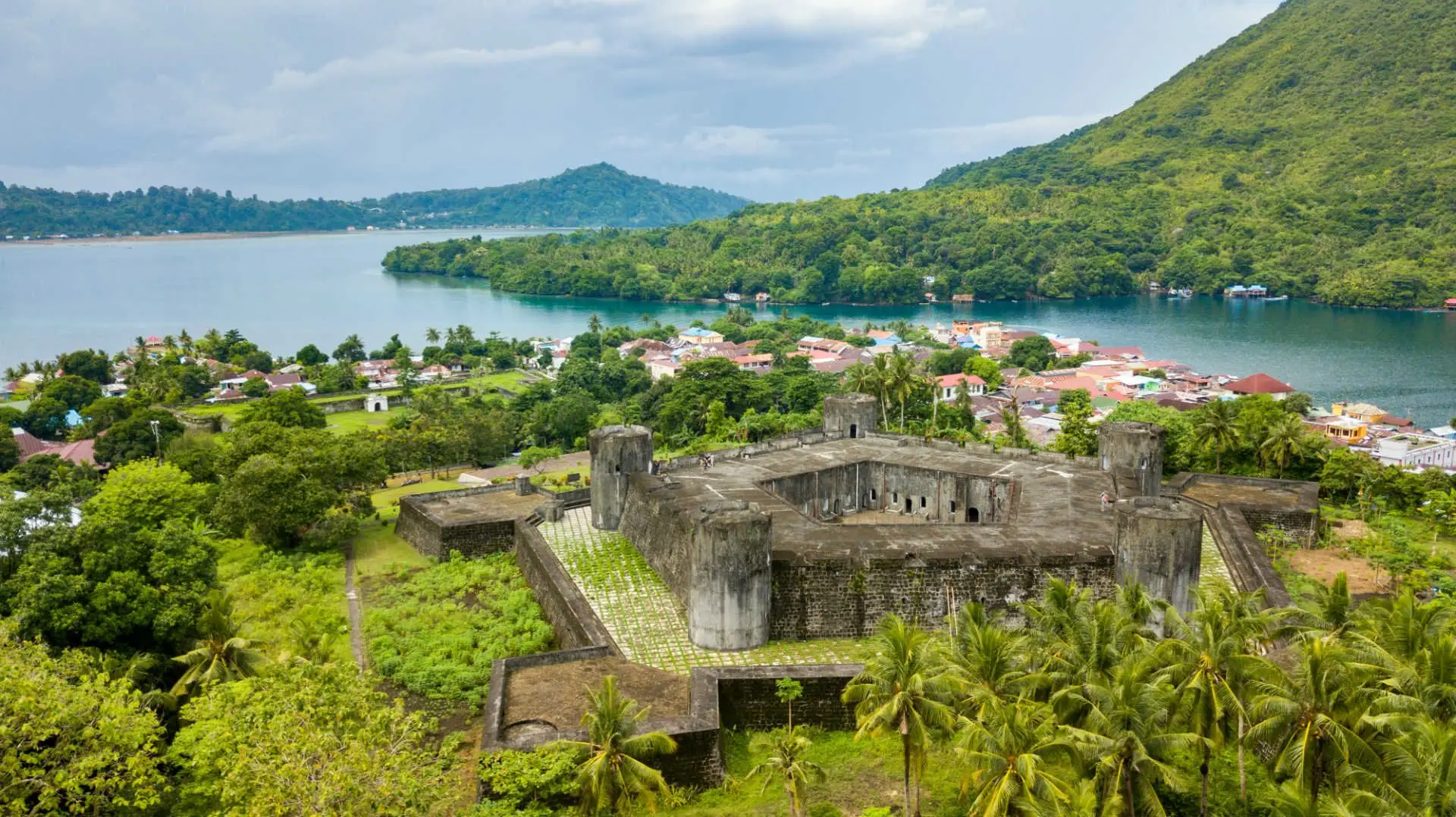
Nutmeg was worth more than gold in medieval Europe. It was believed to cure the bubonic plague. The Dutch arrived in the early 1600s, built massive stone forts, and initiated a brutal monopoly. They massacred thousands of local Bandanese to control the spice trade.
Have you ever heard of the Treaty of Breda? In 1667, the British controlled one tiny island in the Bandas called Pulau Run. The Dutch wanted total control. So, they made a trade. The British gave the Dutch Pulau Run. In exchange, the Dutch gave the British a swampy little island across the Atlantic. That island was Manhattan.
Yes. New York City was traded for a tiny speck of land in the Maluku province. The nutmeg history here is staggering.
What to Do in the Banda Islands by Traveler Type
Now that you are here, what do you actually do? A good Banda Islands travel guide should cater to your specific travel style. Let’s break it down.
For Scuba Divers and Snorkelers
Maluku diving is world-class. The isolation means the reefs are virtually untouched. If you are reading this Banda Islands travel guide for diving info, pay attention to the Lava Flow.
In 1988, the local volcano (Gunung Api) erupted, sending a river of lava straight into the ocean. It destroyed the coral reef. But incredibly, the reef grew back at an unprecedented rate. Today, the Lava Flow dive site features 100% hard coral coverage. It is a stunning, vibrant underwater garden. You will also want to dive at Pulau Hatta, where deep drop-offs attract hammerhead sharks, eagle rays, and massive schools of barracuda.
For Adventurers: Climbing Gunung Api
Gunung Api is the perfect, conical volcano dominating the skyline. You can climb it. It will hurt.
The hike is a relentless, steep scramble up loose volcanic scree. It takes about 2 to 3 hours to reach the summit, and the descent is tough on the knees. Start your trek at 4:30 AM to beat the brutal equatorial heat. A local guide costs around 200,000 IDR. At the top, you can literally feel the heat radiating from the steam vents and enjoy a sweeping panoramic view of the entire archipelago.
For History Buffs
Walk the sleepy streets of Banda Neira. Visit Fort Belgica, a massive, brilliantly restored 17th-century star fort that looms over the town. Entry is cheap (about 20,000 IDR), and you can climb the bastions for incredible views. Afterward, wander over to the old Dutch Governor’s mansion and the crumbling ruins of Fort Nassau. You will feel like you walked onto a movie set.
Island Hopping: Beyond Banda Neira
Any comprehensive Banda Islands travel guide must push you to leave the main island. Banda Neira is great, but the outer islands are pure magic.
Pulau Ai
Pulau Ai has no cars and no motorcycles. Just sandy paths, historic plantation walls, and some of the best beaches in the region. Getting there requires hiring a small motorized outrigger canoe (called a perahu) from the Banda Neira market harbor. The ride takes 45 minutes and costs about 50,000 IDR. The snorkeling right off the beach is phenomenal.
Pulau Run
This is the island the British traded for Manhattan. Today, it is a sleepy fishing village covered in nutmeg trees. The historical irony is palpable. You walk past drying nutmeg seeds and realize wars were fought over this exact dirt. It is a longer boat ride from Banda Neira (up to 2 hours), so it makes for a long day trip, but history lovers cannot skip it.
Pulau Hatta
Named after Indonesia’s first Vice President (who was exiled here), Pulau Hatta is a diver’s paradise. There are a few very basic homestays right on the white sand beach. You step off the sand, swim 20 meters, and drop over a vertical coral wall. It is spectacular. A private boat charter here will cost around 600,000 to 800,000 IDR for the day, which is easily split among a group.
Where to Stay & Eat in the Spice Islands
Your Banda Islands travel guide needs actionable hotel recommendations. There are no mega-resorts here. Everything is locally owned, which keeps the money in the community.
Luxury: Cilu Bintang Estate
This is the premier accommodation in Banda Neira. It sits right below Fort Belgica. The owner, Abba, is a local legend who can arrange flights, boats, and diving. Rooms run about 800,000 to 1,200,000 IDR ($50-$75 USD) per night. They serve a legendary breakfast featuring homemade nutmeg jam.
Mid-Range: Baba Lagoon
Located right on the water, Baba Lagoon offers clean, air-conditioned rooms with ocean views. It is popular with divers. Expect to pay around 400,000 to 600,000 IDR per night. The patio is the perfect place to watch the sunset over the volcano.
Budget: Homestays on Outer Islands
If you head to Pulau Ai or Pulau Hatta, guesthouses like Green Peace Homestay offer a bed and three massive meals a day for about 250,000 IDR ($16 USD). It is rustic. You will likely use a traditional bucket shower (mandi), but the hospitality is unmatched.
What to Eat:
The food here is rich and flavorful. You absolutely must try Ikan Bakar (grilled fish) caught fresh that morning, served with Sambal Dabu-Dabu (a spicy, citrusy tomato relish). A whole grilled tuna at a local warung will cost you less than $4. Do not leave without buying a jar of sweet nutmeg jam to take home.
Perfect Banda Islands Itineraries (5 and 7 Days)
To make this the best Banda Islands travel guide available, I am giving you exact, day-by-day plans. This takes the guesswork out of your trip.
The 5-Day “Highlights” Itinerary
- Day 1: Arrival & History. Arrive on the morning Express Bahari. Check into your guesthouse. Spend the afternoon exploring Fort Belgica and the local market.
- Day 2: Island Hopping. Charter a boat to Pulau Ai. Snorkel the drop-off, walk through the nutmeg plantations, and relax on the pristine beaches.
- Day 3: The Volcano. Wake up at 4:30 AM to summit Gunung Api. Return by 9:00 AM. Sleep, recover, and enjoy a massive seafood dinner in the harbor.
- Day 4: Lava Flow Diving. Book a morning dive or snorkel trip to the Lava Flow. The afternoon is yours to wander around Banda Neira and buy nutmeg souvenirs.
- Day 5: Departure. Catch the early morning fast boat back to Ambon.
The 7-Day “Explorer” Itinerary
- Days 1-3: Follow the same schedule as the 5-day itinerary.
- Day 4: Head to Pulau Hatta. Take a public boat or private charter to Pulau Hatta. Check into a beachside homestay. Disconnect entirely.
- Day 5: Wall Diving & Snorkeling. Spend the entire day exploring the underwater drop-offs at Pulau Hatta. The marine life here is superior to the main island.
- Day 6: Pulau Run History Trip. Take a boat from Hatta (or back from Banda Neira) out to Pulau Run. Stand on the island traded for Manhattan.
- Day 7: Departure. Return to Banda Neira, pack your bags, and board the Express Bahari back to Ambon.
Your Custom Interactive Travelmapguide
Visualizing the islands makes planning much easier. While we cannot embed a live interactive map directly in this text, setting up your own digital travelmapguide is simple. Open Google Maps before your trip and drop pins on these exact coordinates. Download the map offline, because internet access will drop the moment you leave the main harbor.
Pins to add to your map:
- Red Pin: Banda Neira Pelni Port (Your arrival and departure point).
- Yellow Pin: Fort Belgica (For sunset views).
- Green Pin: Gunung Api Trailhead (Ask locals for the exact entry point behind the village).
- Blue Pin: Lava Flow dive site (Just off the north coast of the volcano).
- Purple Pin: Pulau Run (Zoom way out to the west to find this tiny speck).
By creating this simple travelmapguide on your phone, you will always know your orientation, even when you lose cell service on a bumpy boat ride.
Frequently Asked Questions
Every Banda Islands travel guide should answer the nagging questions in the back of your mind. Here are the five most common things people ask before heading to Maluku.
1. Are the Banda Islands safe?
Extremely safe. Violent crime is virtually unheard of on the islands. The locals are incredibly welcoming. The biggest dangers here are sunburn, dehydration while climbing the volcano, and boat cancellations due to rough weather.
2. Can I use credit cards in Banda Neira?
No. Cash is king. A few high-end dive shops might accept cards with a hefty 3% surcharge, but you cannot rely on it. Bring millions of Indonesian Rupiah with you from Ambon. There are two ATMs on Banda Neira, but they are frequently broken or empty.
3. Is there malaria in the Banda Islands?
Malaria is present in the wider Maluku region, but the risk on the small, breezy Banda islands is relatively low compared to mainland Papua. That said, consult your doctor. Use strong mosquito repellent, especially at dawn and dusk. Dengue fever is also a minor risk.
4. Do I need to be an advanced scuba diver to visit?
Not at all. While strong currents at sites like Pulau Hatta are best suited for advanced divers with drift experience, there are plenty of calm, protected sites. Furthermore, the snorkeling is so good that non-divers will never feel left out. The coral starts just inches below the surface in many spots.
5. How long should I stay?
Never plan for less than 4 days. Because of the unreliable transport, a tight schedule will cause massive stress. A 5 to 7-day trip is ideal. This gives you a buffer in case your ferry back to Ambon is delayed by a day or two. Always leave a two-day gap between returning to Ambon and your international flight home.
There you have it. You have reached the end of the most brutally honest, logistically sound Banda Islands travel guide available today. The journey to the Spice Islands tests your patience. It requires flexibility. But the moment you drop into that crystal-clear water, or stand atop a 17th-century fort watching the sun set behind a volcano, you will realize why people have obsessed over these islands for centuries.
Pack your bags, grab some cash, and start planning your Banda Islands travel guide itinerary. The adventure of a lifetime is waiting.







One Response