Imagine standing at the base of a massive, seven-tiered stone pyramid hidden deep within the jungle. There are no pushing crowds. There are no loud tour mega-buses. Instead, you hear only the hum of cicadas and the crunch of gravel under your shoes. You have just discovered one of the most incredible Cambodian jungle ruins left on earth. Welcome to the ultimate Koh Ker Cambodia guide.
For decades, this ancient capital was ignored by the masses. It was considered too far, too hard to reach, and too wild. But everything changed in September 2023. That is when Koh Ker was officially crowned a UNESCO World Heritage Site. Suddenly, this forgotten jungle complex is on every savvy traveler’s radar. Yet, despite the new prestigious title, most online information about visiting is hopelessly outdated.
Competitor travel blogs will warn you about “bone-rattling dirt roads” and agonizing three-hour tuk-tuk rides. They are wrong. When we drove out there last month, we found a beautifully paved highway. The trip is now incredibly smooth. If you are looking for an accurate, up-to-date Koh Ker Cambodia guide to plan your 2026 trip from Siem Reap, you are in exactly the right place.
⚡ Quick Facts: Koh Ker Temple Visit
- Distance from Siem Reap: 120km (approx. 1.5 to 2 hours drive).
- Entrance Fee: $15 USD (Not included in the standard Angkor Pass).
- Opening Hours: 7:30 AM to 5:30 PM daily.
- Time Needed: 2 to 3 hours to explore the main complex.
- Best Combined With: Beng Mealea temple.
This comprehensive Koh Ker Cambodia guide will give you the exact logistics, costs, and itineraries you need to execute the perfect day trip. Let’s get started.
Table of Contents
- What is Koh Ker? The True Story Behind the Pyramid
- Why Visit Koh Ker Over Other Angkor Temples?
- How to Get to Koh Ker from Siem Reap
- Koh Ker Ticket Prices & Entrance Fees (2024 Update)
- The Best Temples Inside the Koh Ker Complex
- Ideal Koh Ker Itinerary: Combining Beng Mealea
- Practical Tips for Your Visit
- Frequently Asked Questions (FAQ)
What is Koh Ker? The True Story Behind the Pyramid
To truly appreciate this site, your Koh Ker Cambodia guide needs to start with a little drama. In the 10th century, the Khmer Empire was ruled from the famous capital of Angkor. But in 928 AD, a powerful king named Jayavarman IV decided he wanted his own playground. He usurped the throne, left Angkor behind, and moved the entire capital of the Khmer Empire 120 kilometers northeast into the remote jungle.
He called his new capital Lingapura (City of Lingas), which we now know as Koh Ker. For a brief, explosive period of just 20 years, this area was the absolute center of power in Southeast Asia.
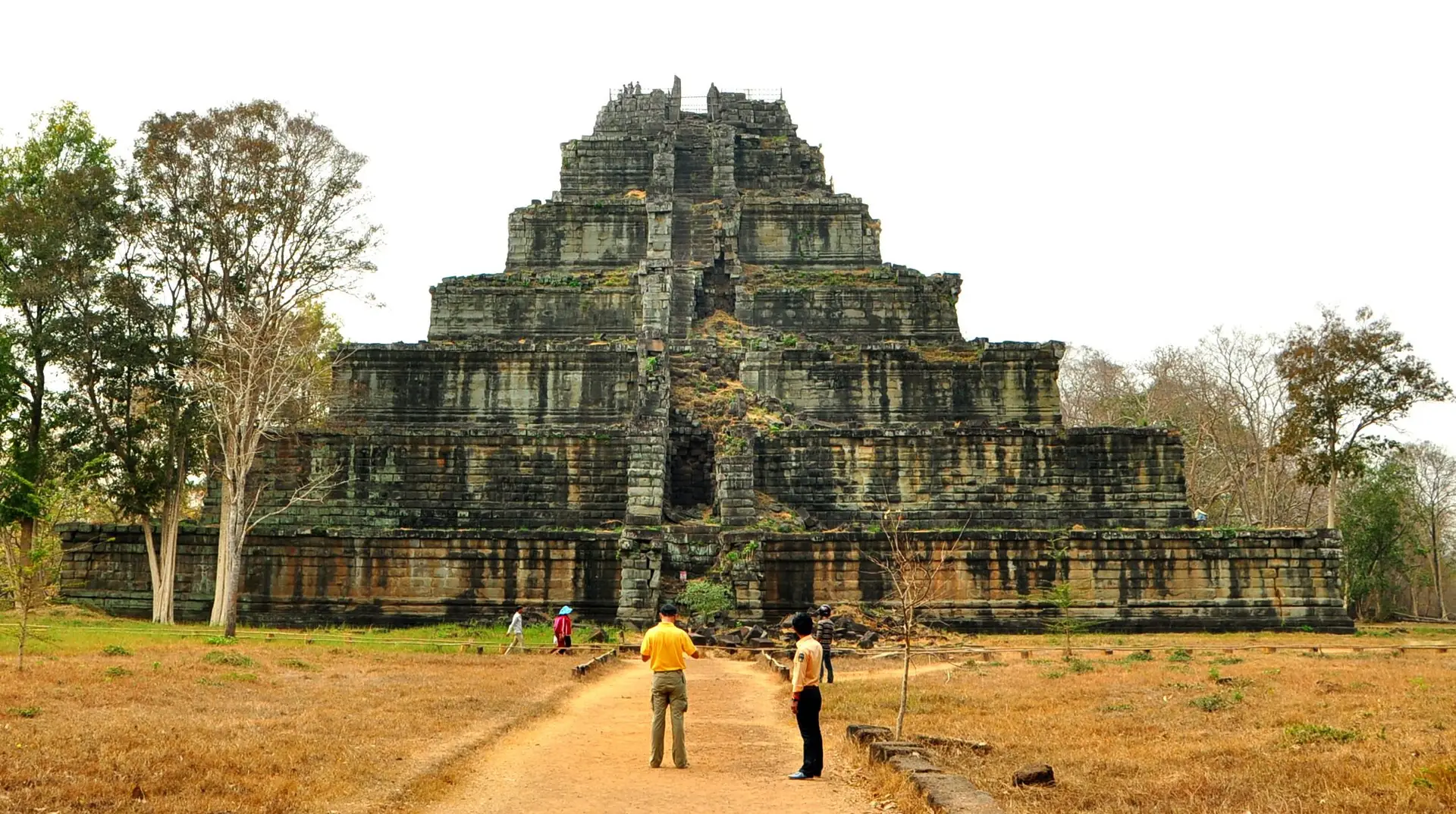
Jayavarman IV went on a massive building spree. He constructed over 40 major temples, state buildings, and a colossal water reservoir. But his crowning achievement was Prasat Thom. This imposing seven-tiered pyramid looks completely different from anything else in Cambodia. In fact, many travelers swear it looks like it belongs in ancient Mexico rather than Southeast Asia. After his death, the capital shifted back to Angkor. The jungle slowly swallowed Koh Ker, leaving it hidden for centuries.
Because of its unique architectural style and historical significance, the site was officially inscribed on the UNESCO World Heritage List in September 2023. This is a massive deal for Cambodia beyond Angkor, promising future preservation funds and infrastructure improvements.
Why Visit Koh Ker Over Other Angkor Temples?
You might be asking yourself a very logical question. “I just spent three days crawling around Angkor Wat. Why should I drive two hours to see more rocks?” It is a fair point. But any honest Koh Ker Cambodia guide will tell you that the experience here is radically different.
First, the isolation is intoxicating. Angkor Wat receives millions of visitors annually. You often have to wait in line just to take a photo. At the Koh Ker temple complex, you might share the entire 81-square-kilometer site with only a dozen other people. You read that right. Zero crowds. Just you and the ancient stones.
Second, the sheer scale and unusual design of the Prasat Thom pyramid offer a unique physical experience. Unlike many temples in the main Angkor archaeological park that are cordoned off to protect the degrading sandstone, you can actually climb the 40-meter-high pyramid here. The wooden staircase built into the side is steep, but the panoramic views of the endless green jungle canopy from the top are magnificent.
How to Get to Koh Ker from Siem Reap
Getting here used to be an arduous, dusty nightmare. That is no longer the case. A foundational element of this Koh Ker Cambodia guide is updating you on the current road conditions. The drive takes you along Route 64, which was fully paved and expanded recently. The journey from central Siem Reap now takes about 1.5 to 2 hours, depending on traffic.
By Private Taxi / Car (Highly Recommended)
Booking a private car with air conditioning is hands down the best way to travel. When we visited, the afternoon heat hit 35°C (95°F) with crushing humidity. Retreating to an air-conditioned car between temple stops was a lifesaver. You can expect to pay around $65 to $85 USD for a private driver for the entire day. The driver will wait for you at each stop and usually provides cold bottled water.
By Tuk-Tuk (Pros and Cons)
Can you take a tuk-tuk? Yes. Should you? Probably not. A tuk-tuk will cost around $40 to $50 for the day, saving you a little money. However, the top speed of a tuk-tuk is much slower, pushing your travel time closer to 2.5 or 3 hours each way. Furthermore, you will be exposed to the highway dust and the brutal midday heat. We strongly advise against this option for a journey of this length.
Joining a Group Tour
If you are a solo traveler looking to split costs, several tour operators in Siem Reap offer shared minibus trips. These usually combine Koh Ker with Beng Mealea. Prices hover around $35 to $45 per person, not including entrance fees. The downside? You lose your flexibility. You cannot linger at a beautiful spot or skip a temple if you feel fatigued.
Koh Ker Ticket Prices & Entrance Fees (2026 Update)
Let’s talk about the budget. An essential piece of advice in this Koh Ker Cambodia guide is understanding how the ticketing system works. It is entirely separate from your standard Angkor Wat experience.
Your Angkor Pass will not work here. Because Koh Ker is managed by a different local authority and sits far outside the main archaeological zone, you must purchase a separate ticket.
- Adult Ticket: $15 USD
- Children Under 12: Free (Bring a passport copy to prove age).
- Cambodian Citizens: Free
You buy the ticket at an official checkpoint located a few kilometers before you actually reach the temple complex. Your driver will know exactly where to stop. You can pay in US Dollars or Cambodian Riel. Make sure your USD bills are crisp and clean; torn or highly wrinkled bills are frequently rejected in Cambodia.
Private Car ($70) + Entrance Ticket ($15) + Lunch & Drinks ($10) = $95 Total for one person (Or $60 per person if splitting the car with a friend).
The Best Temples Inside the Koh Ker Complex
One major mistake travelers make is thinking Koh Ker is just a single pyramid. It is actually a massive sprawling complex featuring dozens of ruins. While you do not need to see all of them, this Koh Ker Cambodia guide highlights the absolute must-sees. Ask your driver to follow this logical loop.
1. Prasat Pram (The Root Temple)
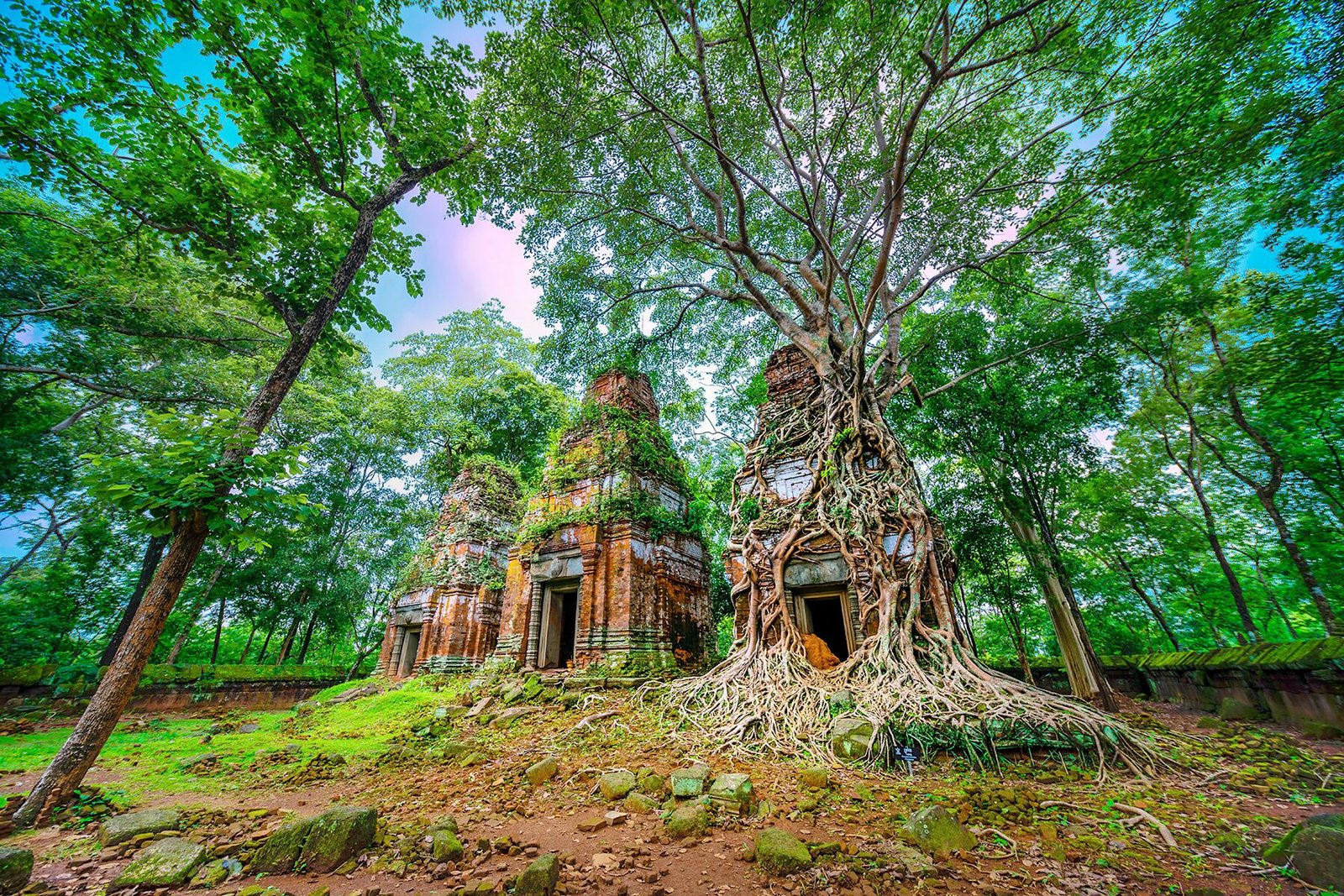
Usually the first stop on the loop, Prasat Pram is astonishingly photogenic. It consists of five brick towers (pram means five in Khmer). Two of these towers are entirely swallowed by the gigantic, sprawling roots of strangler fig trees. It offers the exact “Tomb Raider” aesthetic you want, but without the crowds of Ta Prohm. The morning light filtering through the canopy here creates a magical atmosphere.
2. Prasat Thom (The Main Pyramid)
This is the main event. You will pass through a ruined entrance pavilion and walk along a causeway flanked by collapsed galleries. Then, suddenly, the trees clear, and the 40-meter, seven-tiered sandstone pyramid rises aggressively into the sky. When we visited last month, we noticed the wooden stairs scaling the back of the pyramid have been newly reinforced, making the steep climb much safer. Do not skip the climb; the breeze at the top is wonderful.
3. Prasat Linga (The Phallic Shrines)
Because Jayavarman IV dedicated his city to the Hindu god Shiva, he commissioned enormous lingas (phallic stone carvings representing Shiva’s energy). While many were looted over the centuries, several massive, monolithic stone lingas—some of the largest ever carved in the Khmer Empire—still stand perfectly upright in their ruined brick enclosures.
4. Prasat Neang Khmau (The Black Lady)
This tall, single tower is unique due to the dark, charcoal-like coloring of its laterite stone walls. It has a slightly eerie, commanding presence. “Neang Khmau” translates to “Black Lady.” Local legends suggest the temple was dedicated to Kali, the dark goddess of destruction, adding a layer of mystery to the ruin.
Ideal Koh Ker Itinerary: Combining Beng Mealea & Preah Vihear
Because you are driving a considerable distance, it makes zero sense to visit Koh Ker and immediately turn back. The best Koh Ker Cambodia guide strategy is to create a multi-destination day trip.
Option 1: The Classic Route (Beng Mealea + Koh Ker)
This is the most popular route and makes for a perfect 7-to-8 hour day.
- 7:30 AM: Depart your hotel in Siem Reap.
- 8:45 AM: Arrive at Beng Mealea. This is the ultimate “undiscovered” jungle temple. It is heavily ruined, with massive piles of collapsed sandstone blocks covered in moss. You explore it via an elevated wooden boardwalk. (Requires a separate $5 ticket).
- 10:30 AM: Drive another 50 minutes to Koh Ker.
- 11:30 AM: Arrive at Koh Ker. Buy tickets and begin the loop. Start at Prasat Pram, work your way to the pyramid (Prasat Thom), and climb it before the afternoon heat peaks.
- 1:30 PM: Grab a late lunch at the local wooden restaurants near the main parking area. Their traditional Cambodian Fish Amok is fantastic.
- 2:30 PM: Head back to Siem Reap, arriving around 4:30 PM.
Option 2: The Extreme Northern Route (Koh Ker + Preah Vihear)
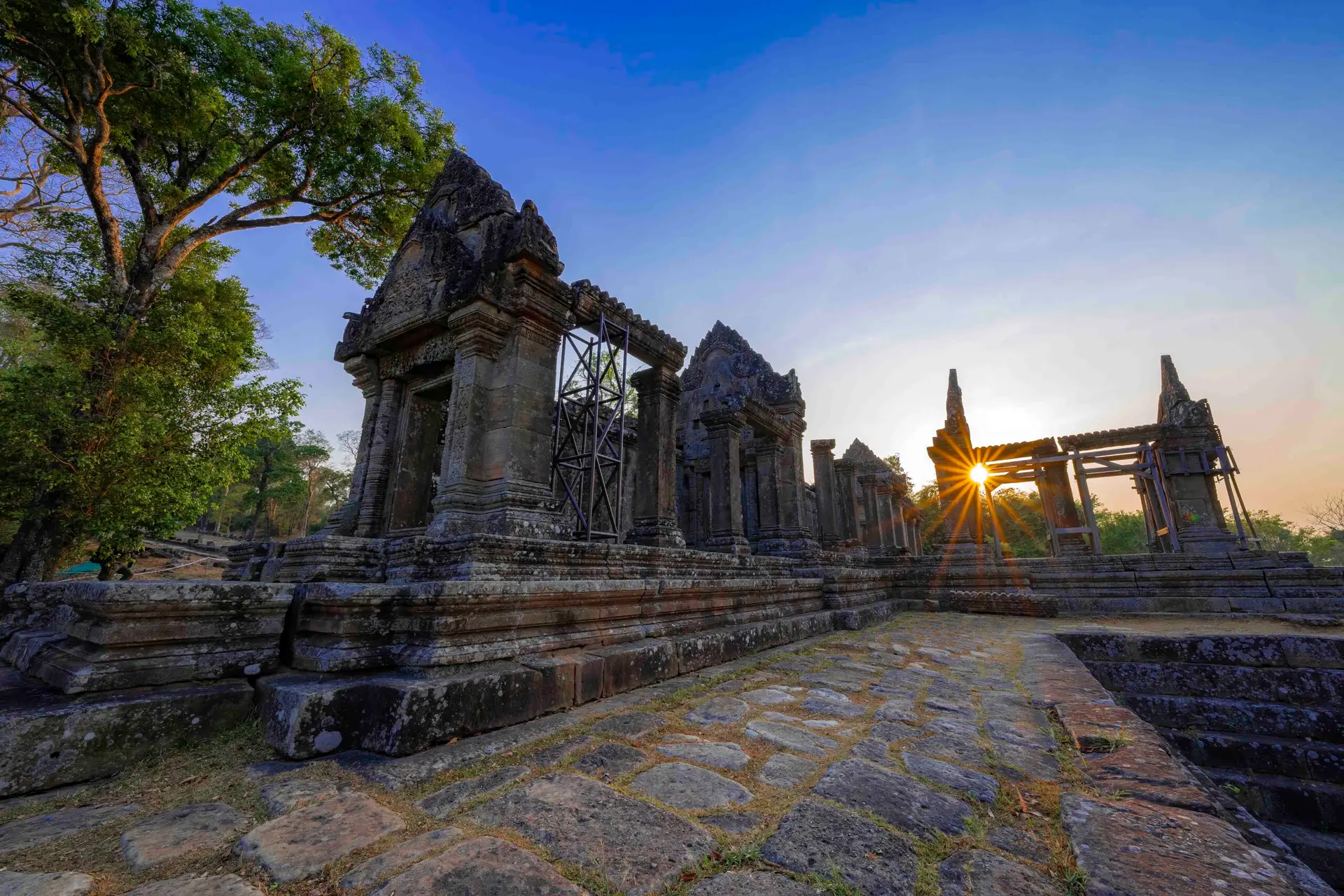
If you are a hardcore history buff, you can combine Koh Ker with the spectacular mountaintop temple of Preah Vihear on the Thai border. Warning: This is a grueling 12-hour day trip requiring a 5:00 AM start. You will drive from Siem Reap to Koh Ker, then continue another 2 hours north to Preah Vihear. We only recommend this if you are highly energized and have a very comfortable private car.
Practical Tips for Your Visit to Koh Ker Temple
A superior Koh Ker Cambodia guide must prepare you for the realities of the Cambodian jungle. Here are the practical logistics you need to keep in mind to ensure your trip is safe and comfortable.
1. Stick to the Marked Paths (Landmine Warning)
During the decades of civil conflict in Cambodia, remote areas like this were heavily mined. While the main Koh Ker complex and the paths connecting the temples have been completely cleared and are 100% safe, the deep jungle beyond the warning signs is not. According to clearance organizations like The HALO Trust, significant progress has been made, but you must never wander off the visibly cleared trails into dense vegetation.
2. Dress Code Requirements
Koh Ker is an active religious site. Despite being ruined, it is sacred to the Cambodian people. You must cover your shoulders and your knees. Tank tops, spaghetti straps, and short-shorts are strictly prohibited. The guards at the ticket gate or the base of the pyramid will absolutely turn you away if you are dressed inappropriately. Wear lightweight, breathable cotton or linen.
3. Dealing with the Heat
The heat radiating off the laterite stone by 1:00 PM is intense. Bring a hat, high-SPF sunscreen, and at least two liters of water per person. We recommend checking the official weather conditions before your trip, as visiting during the peak rainy season (September-October) might require packing a heavy-duty poncho.
4. Restrooms and Food
Do not worry about starving in the jungle. Directly across from the entrance to Prasat Thom, there is a small cluster of local open-air restaurants. They serve excellent fried rice, noodles, and cold coconuts. There are also clean, modern public restroom facilities located near this parking area and at the ticket checkpoint. Keep some small 1,000 Riel notes handy, as bathroom attendants appreciate a small tip.
Frequently Asked Questions (FAQ)
Even with a detailed Koh Ker Cambodia guide, travelers usually have a few specific questions. We have compiled the most common inquiries to clear up any remaining confusion.
Is Koh Ker worth visiting?
Absolutely. If you suffer from “temple fatigue” after visiting Angkor Wat, the Koh Ker temple complex will cure it. The distinct pyramid architecture, the serene lack of crowds, and its new UNESCO status make it one of the most rewarding day trips in Southeast Asia.
Can you still climb the Koh Ker pyramid?
Yes! A modern, sturdy wooden staircase has been constructed on the backside of Prasat Thom. It is steep, but perfectly safe for anyone with moderate fitness. Climbing the actual ancient stone steps on the front of the pyramid is strictly forbidden to preserve the structure.
Is Koh Ker included in the Angkor Pass?
No, it is not. Koh Ker operates under a completely different ticketing system. You must purchase a separate entrance ticket for $15 USD at the checkpoint just outside the complex.
How long does it take to see the whole complex?
If you are driving between the smaller temples (like Prasat Pram and Prasat Linga) and spending time climbing the main pyramid, expect to spend between 2 to 2.5 hours at the site. Add an hour if you decide to sit down for a full lunch at the nearby restaurants.
Is it safe to visit Koh Ker without a guide?
Yes, it is highly safe to visit on your own as long as you stay on the cleared paths. Hiring an official tour guide is entirely optional. However, if you want deep historical context about Jayavarman IV and his brief 20-year empire, hiring a licensed local guide in Siem Reap to ride out with you is highly recommended.