
I just returned from a spectacular, exhausting, and eye-opening three-week trip hopping between tiny atolls. Today is May 16, 2026, and I can tell you right now: almost every Maldives travel guide on the internet is missing the mark.
Why? Because they either cater exclusively to ultra-wealthy honeymooners spending $5,000 a night, or they are written by hardcore backpackers sleeping in $30-a-night local guesthouses. Where is the middle ground? Where is the realistic, boots-on-the-ground advice for normal travelers who want a mix of both?
You need a Maldives travel guide that tells you the truth. You need to know that seaplanes stop flying at sunset, stranding unprepared tourists in the capital. You need to know about the staggering 26% hidden tax applied to your food. And you definitely need to know how to pick the right island, because not all Maldives beaches are created equal.
Whether you are hunting for luxurious overwater bungalows or exploring Maldives on a budget local islands, this is the only resource you will need. Let’s get into it.
Table of Contents
- 1. Maldives Geography 101: Capital, Locals, and Resorts
- 2. Entry Requirements & Best Time to Visit
- 3. The Logistics Masterclass: How to Actually Get Around
- 4. Accommodation Breakdown: Resorts vs. Local Islands
- 5. Food, Alcohol, & Hidden Costs You Need to Know
- 6. Cultural Etiquette: Bikini Beaches Maldives Explained
- 7. Sustainability: Protecting Paradise
- Frequently Asked Questions
1. Maldives Geography 101: Capital, Locals, and Resorts
Before you book anything, your Maldives travel guide needs to explain how this country is actually built. The Maldives is not one giant landmass. Think of it like a ceramic plate that someone smashed on the kitchen floor. The pieces are scattered everywhere.
The country consists of 1,192 tiny coral islands grouped into 26 natural atolls (ring-shaped coral reefs). Understanding this geography is the foundation of your trip.
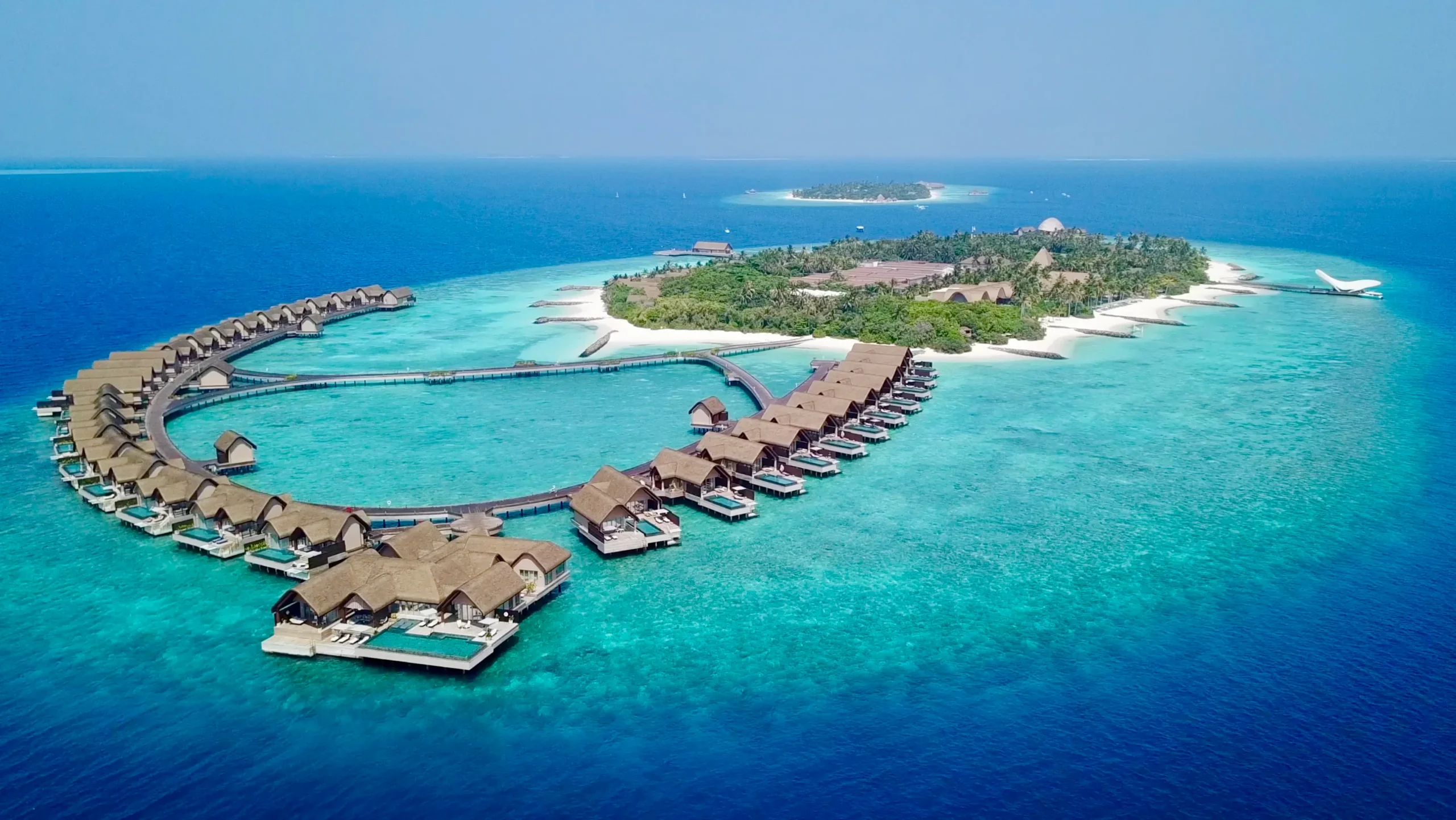
- Malé (The Capital): This is where the international airport (Velana International Airport – MLE) is located. It is a dense, concrete jungle. You do not want to spend your vacation here. You arrive here, and you leave immediately.
- Private Resort Islands: These follow the “one island, one resort” rule. If you book a stay at a luxury brand, they own the entire island. You will find the iconic overwater bungalows here.
- Local Islands: These are islands where Maldivian citizens actually live. In the last decade, the government allowed guesthouses to open here. This created an entirely new way to experience the country affordably.
Any comprehensive Maldives travel guide must acknowledge both the resort and the local island experience. Combining them gives you the best of both worlds.
2. Entry Requirements & Best Time to Visit
Getting into the country is incredibly straightforward. The Maldives grants a free 30-day visa on arrival to all nationalities. You just need a passport with at least one month of validity, a hotel booking, and an onward flight ticket. You can verify the latest entry rules directly via Maldives Immigration.
But when should you actually go?
Right now, in mid-May 2026, we are entering the wet season. The weather dictates your Maldives cost and experience entirely.
The Dry Season (November to April): This is peak season. The skies are flawlessly blue. The water is glass. Humidity is manageable. The catch? You will pay absolute top dollar for Maldives resorts. Prices peak violently around Christmas and New Year.
The Wet Season (May to October): Do not let the word “wet” terrify you. It rarely rains all day. You will experience short, dramatic afternoon thunderstorms followed by sunshine. The major benefit here is the price. Overwater bungalows can drop by up to 40% in price. If you want a luxury experience without taking out a second mortgage, travel in June or September.
3. The Logistics Masterclass: How to Actually Get Around
This is the number one pain point for travelers. The biggest failure of almost every Maldives travel guide out there is ignoring the brutal realities of inter-island transit. You cannot just call an Uber.
You have three ways to get from the Malé airport to your hotel.
The Public Ferry & Speedboats
If your island is located in the North Malé or South Malé atoll, you are in luck. You can take a speedboat directly from the airport marina. Public ferries are dirt cheap (around $2 to $5) but painfully slow and frankly unreliable. Shared speedboats cost between $25 and $50 per person. They run on a set schedule and get you to your island in 30 to 90 minutes.
Domestic Flights
If you are heading to the deep southern atolls, you need a domestic flight. You will board a standard commercial prop plane at Malé, fly to a local regional airport, and then take a short speedboat ride to your final island. This usually costs between $150 and $300 round trip.
The Seaplane (Read Carefully)
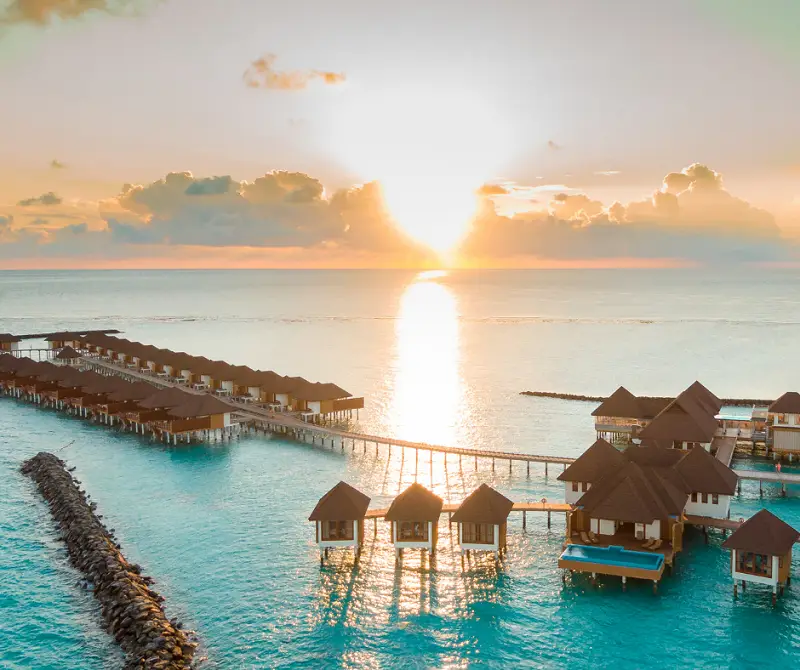
Seaplanes are the quintessential, romanticized Maldives transport. They land directly on the water next to your resort. They cost a fortune—often $400 to $800+ per person, round trip. But here is the critical Maldives travel guide secret most people miss:
Seaplanes ONLY fly during daylight hours.
If your international flight lands at Malé after 3:30 PM, you missed the seaplane window. You will be forced to book a transit hotel in Malé or Hulhumalé for the night and fly out the next morning. Plan your international flights accordingly!
Additionally, pay close attention to the Maldives seaplane luggage allowance. Trans Maldivian Airways strictly enforces a 20kg (44 lbs) checked bag limit and a 5kg (11 lbs) carry-on limit. If you pack a massive suitcase for a three-week trip, you will pay exorbitant overweight baggage fees at the seaplane terminal.
4. Accommodation Breakdown: Resorts vs. Local Islands
Your overall Maldives cost depends entirely on where you sleep. So, how to choose a Maldives resort or local island?
Choosing a Resort
Not all Maldives resorts are the same. When deciding, do not just look at the room photos. Look at the atoll.
Are you obsessed with marine life? You need to book a resort in the Baa Atoll or South Ari Atoll. South Ari is famous for year-round whale shark sightings. Baa Atoll is a UNESCO Biosphere Reserve where hundreds of manta rays gather at Hanifaru Bay. If you are an avid diver, checking resources like PADI will show you that the southern atolls have the best unbleached corals.
Furthermore, check the “house reef.” A house reef is the coral reef directly accessible from your resort’s beach. Some resorts sit on massive sandy lagoons. They look beautiful in photos, but the snorkeling is terrible. Other resorts have a sheer coral drop-off just 10 feet from your overwater bungalows. Decide what matters more to you: infinite turquoise sandbars or vibrant snorkeling.
Maldives on a Budget Local Islands
If $1,000 a night is not in your budget, do not panic. This Maldives travel guide highly recommends the local island route. Islands like Maafushi, Thulusdhoo, and Dhigurah offer spectacular guesthouses for $60 to $150 a night.
You can wake up, eat a local breakfast of mas huni (tuna, coconut, and onion), and pay a local boat captain $30 to take you snorkeling with nurse sharks. The beaches are exactly the same. The ocean is exactly the same. The price tag is just 90% cheaper.
5. Food, Alcohol, & Hidden Costs You Need to Know
This is where vacations are ruined. I want to make this Maldives travel guide as realistic as possible.
When you look at a menu at a resort, the price you see is almost never the price you pay. The Maldives has severe hidden costs and taxes. Everything you buy at a resort will be hit with a massive 26% markup.
How does that math work?
- T-GST (Tourism Goods and Service Tax): 16%
- Mandatory Property Service Charge: 10%
That $30 hamburger is actually $37.80. That $150 massage is actually $189. Add in the mandatory “Green Tax” of $6 per person, per night, and your checkout bill can be a terrifying surprise.
Half-Board vs. All-Inclusive
Food is shockingly expensive because everything is imported. Should you get the all-inclusive package? Do the math.
Half-board means your breakfast and dinner are included. You pay for your own lunch and drinks. If you are a couple who drinks three or four cocktails a day (which often run $20 each), the all-inclusive upgrade is usually worth it. If you do not drink alcohol, stick to half-board. You will save hundreds of dollars a day.
6. Cultural Etiquette: Bikini Beaches Maldives Explained
The Maldives is a strict Islamic republic. You must respect local laws. This is a crucial element that a glossy, photo-heavy Maldives travel guide usually ignores.
If you are staying on a private resort island, you can wear whatever you want. You can drink alcohol at the bar. You can wear a string bikini. The resorts operate in their own bubble.
However, if you visit the capital city or stay on local islands, the rules change drastically.
Alcohol is strictly illegal on local islands. You cannot buy it, you cannot bring it into the country from duty-free, and you cannot drink it in your guesthouse. If you want a beer while staying on a local island, you have to take a speedboat to an offshore “safari boat” (a floating bar).
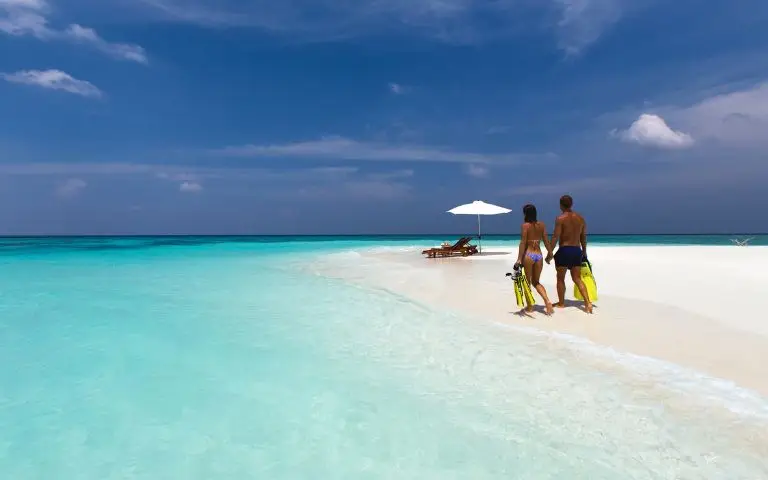
What about swimming? This is where the concept of the “Bikini Beach” comes in. Bikini beaches Maldives explained simply: Local islands designate one specific tourist beach screened off by fences or palm trees. On this specific beach, tourists are allowed to wear standard western swimwear. Everywhere else on the island, you must cover your shoulders and knees. Walking through a local village in a swimsuit is deeply offensive and illegal.
7. Sustainability: Protecting Paradise
The Maldives is the lowest-lying country on earth. Its highest natural point is less than 8 feet above sea level. Climate change is an existential threat here.
As a visitor, you have a responsibility. Coral bleaching events driven by rising sea temperatures have devastated parts of the Indian Ocean. Do your part by only bringing and wearing reef-safe sunscreen. Chemical sunscreens containing oxybenzone suffocate and kill coral polyps. You can learn more about this through scientific bodies like NOAA.
Additionally, be mindful of your plastic usage. Trash disposal is a massive logistical nightmare for tiny islands. Bring a reusable water bottle that filters tap water, and pack out any non-biodegradable trash you bring in.
Frequently Asked Questions
To wrap up this ultimate Maldives travel guide, let’s answer the most common rapid-fire questions travelers ask when planning their 2026 trip.
Do I need a visa to visit the Maldives?
No prior visa is required. The Maldives grants a free 30-day visa on arrival to all tourists, provided you have a valid passport, a confirmed hotel booking, and a return flight ticket.
How much does a trip to the Maldives actually cost?
Your Maldives cost varies wildly. A budget trip on local islands can cost as little as $100 to $150 per day for two people. A mid-range resort will average $400 to $800 per night. Ultra-luxury overwater bungalows routinely exceed $2,000 per night.
Are overwater bungalows worth the high price?
They are an incredible, bucket-list experience, but they get hot during the day as they sit directly over the glaring ocean. A great compromise is booking a cheaper beach villa for four nights, then upgrading to an overwater villa for your final two nights.
What is the Maldives seaplane luggage allowance?
Trans Maldivian Airways allows 20kg (44 lbs) for checked baggage and 5kg (11 lbs) for carry-on per passenger. Any weight above this is subject to strict overweight fees, usually around $5 to $7 per extra kilogram, and your bags may be delayed to a later flight.
Can you visit the Maldives on a budget local islands and still get the luxury feel?
Yes! Many local guesthouses offer affordable day passes to nearby luxury resorts. You can sleep cheaply on a local island, pay $100 for a resort day pass, enjoy their pools and bars, and return to your affordable bed at night.
Finding the perfect balance between luxury and reality is what makes a trip unforgettable. Use this Maldives travel guide as your blueprint, double-check your transit times, and prepare for the most visually stunning ocean environment on the planet. Safe travels!





One Response