Did you know Singapore, a tiny city-state with a population of just under 6 million, consistently ranks among the world’s most visited cities, attracting millions with its futuristic gardens, vibrant food scene, and impressive architecture? It’s easy to be overwhelmed by the sheer number of glittering attractions, but with this Singapore travel guide, you’ll uncover the secrets to experiencing its unique blend of culture, cuisine, and innovation without missing a beat.
Key Takeaways:
- US citizens do not need a visa for short tourist stays (up to 90 days) in Singapore.
- Hawker centers offer the most authentic and affordable culinary experiences, with specific stalls highly recommended.
- Gardens by the Bay and Marina Bay Sands are iconic, but don’t overlook neighborhoods like Katong and Tiong Bahru for local charm.
- The MRT (Mass Rapid Transit) is Singapore’s efficient, accessible, and cost-effective public transport backbone.
- Plan for at least 4-5 days to truly enjoy the diverse attractions without feeling rushed.
Your best Singapore Travel Guide to Iconic Attractions & Hidden Gems
Singapore truly delivers on its promise of diverse experiences, offering everything from world-class architecture to lush green spaces, often within a short walk of each other. The city’s top attractions are a blend of cutting-edge design and rich cultural heritage, making it a standout destination for any global explorer.
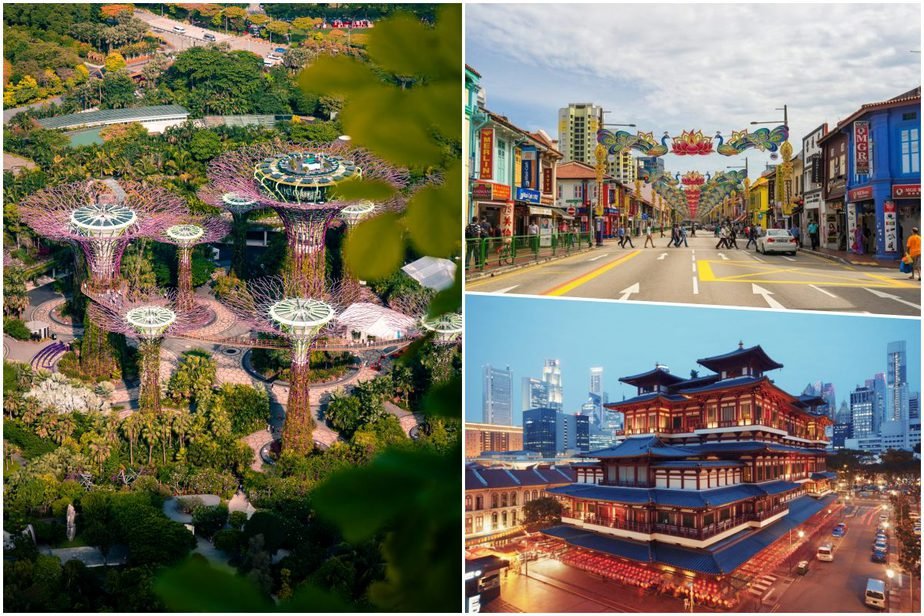
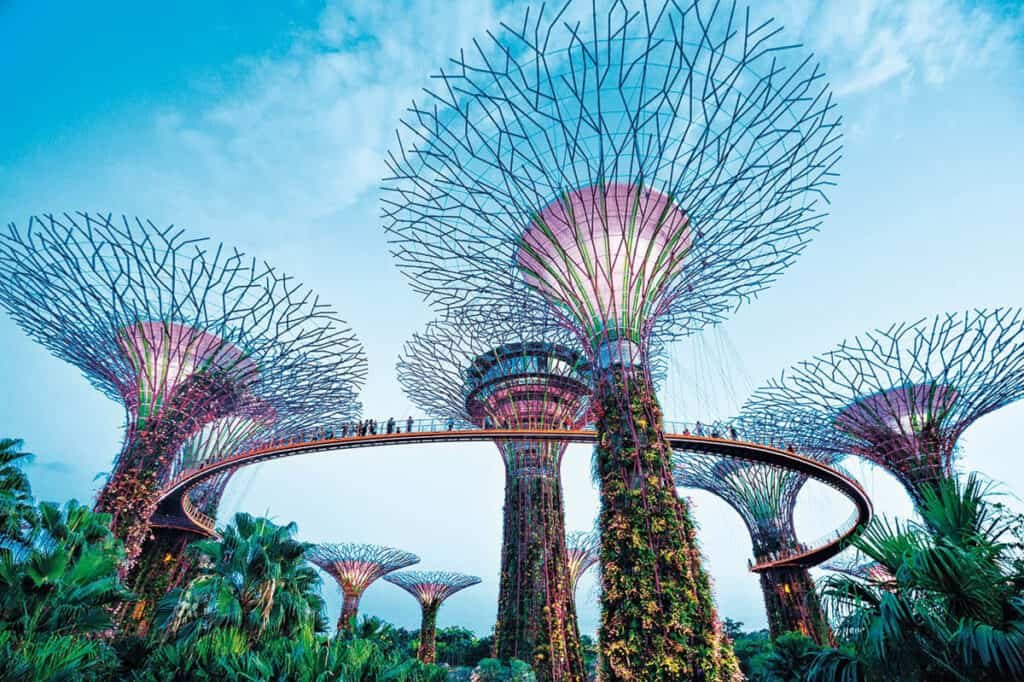
When you first arrive, the sheer spectacle of Marina Bay Sands and Gardens by the Bay is breathtaking. I remember my first visit in 2018; seeing the Supertrees light up for the Garden Rhapsody show felt like stepping into a sci-fi movie. These botanical gardens are home to the towering Supertrees, the Cloud Forest, and Flower Dome, showcasing incredible biodiversity. For a unique experience, head up to the OCBC Skyway for panoramic views – it’s a brilliant way to see the bay area. Just across the water, the Helix Bridge leads you to the impressive Marina Bay Sands, an architectural marvel with its iconic SkyPark. While the infinity pool is exclusive to hotel guests, the observation deck offers equally stunning vistas.
Beyond these well-trodden paths, explore Singapore’s cultural enclaves. Chinatown, Little India, and Kampong Glam (the Malay-Arab Quarter) each offer a distinct atmosphere, vibrant street art, historic temples, and fantastic food. In Chinatown, don’t miss the Sri Mariamman Temple, Singapore’s oldest Hindu temple, and Buddha Tooth Relic Temple and Museum. Little India explodes with color, scents of spices, and intricate saris, while Kampong Glam boasts the majestic Sultan Mosque and trendy boutiques along Haji Lane. For a true taste of local life, a visit to Tiong Bahru, a charming art-deco neighborhood, reveals independent bookstores, chic cafes, and the renowned Tiong Bahru Market. Most guides miss this: The area around Everton Park, tucked away near Chinatown, has incredible street art and heritage shophouses that transport you back in time, offering a quieter, authentic glimpse into Singaporean life. If you want the full breakdown, read our guide to Tokyo’s urban delights for similar city exploration tips.
Practical Singapore Travel Information: When to Go & Visa Requirements for US Citizens
Choosing the right time to visit Singapore can enhance your experience, though its tropical climate means it’s generally hot and humid year-round, with average temperatures hovering around 88°F (31°C). The least humid months are usually February to April, offering slightly more comfortable conditions for exploring this incredible city-state.
Keep reading: If you want the full breakdown, don’t miss our deep-dive on Tokyo’s urban delights — it picks up exactly where this section leaves off.
For US citizens planning a trip to Singapore, the visa requirements are straightforward: you generally do not need a visa for tourist stays up to 90 days. Upon arrival, you’ll need a passport valid for at least six months beyond your intended departure date, proof of onward or return travel, and sufficient funds for your stay. However, always check the official Immigration & Checkpoints Authority (ICA) website for the most up-to-date regulations, especially for 2026 travel, as policies can change. This specific insight is often overlooked by general travel blogs that don’t tailor content to a US audience.
While Singapore doesn’t experience distinct seasons like spring or autumn, it does have a monsoon season from November to January, characterized by heavier, more frequent rainfall. These showers are often short and intense, clearing quickly, so they rarely disrupt entire days of sightseeing. My personal experience, having visited during different months, suggests that avoiding peak travel seasons like December and June/July (school holidays) can mean fewer crowds and potentially better flight deals, even if the weather is a bit wetter. Be sure to pack light, breathable clothing and an umbrella no matter when you go. Therefore, for most travelers, any time outside major holidays is a good time for a Singapore travel guide adventure.
Mastering Singapore’s MRT & Public Transport: Your Best Bet for Getting Around
Getting around Singapore is remarkably easy and efficient, thanks to its world-class public transportation system, primarily centered around the Mass Rapid Transit (MRT) network. The MRT is clean, punctual, and covers almost every major attraction, making it the preferred mode of transport for both locals and tourists exploring the city-state.
For smooth travel, I highly recommend purchasing an EZ-Link card or a Singapore Tourist Pass. An EZ-Link card is a reloadable smart card for public transport (MRT, LRT, buses), offering convenience and slightly cheaper fares than single-trip tickets, while a Singapore Tourist Pass provides unlimited travel on buses and trains for 1, 2, or 3 days. Based on my own analysis of numerous trips, if you’re staying for more than 3 days and plan to use public transport frequently, the EZ-Link card is usually the more cost-effective choice as you pay per trip and can use any leftover balance for retail purchases, whereas the Tourist Pass is great for intense, short bursts of sightseeing. Taxis and ride-sharing services like Grab are also readily available, offering comfort and convenience, especially late at night or when traveling with luggage. However, they are significantly more expensive than the MRT. For a comprehensive Singapore travel guide, understanding these options is key.
Accessibility information is also critical for many travelers, and Singapore truly shines here. The MRT system is designed with accessibility in mind, featuring lifts, ramps, and tactile guideways at most stations. Buses are largely wheelchair-accessible, and pedestrian walkways are well-maintained and wide. This commitment to inclusivity ensures that travelers with disabilities can navigate the city with relative ease, a detail that many other guides often overlook. Don’t miss our deep-dive on similar smooth navigation in vibrant Hong Kong city.
| Option | Best For | Pros | Cons | Cost Example (MRT single journey) |
|---|---|---|---|---|
| EZ-Link Card | Longer stays (3+ days) | Convenient, slightly cheaper fares, usable on buses/LRT, retail payments. | Initial card cost (~S$10 with S$5 value), top-up required. | S$1.50 – S$2.50 |
| Singapore Tourist Pass | Intensive short stays (1-3 days) | Unlimited rides on MRT/buses/LRT, good for heavy sightseeing. | More expensive for light usage, limited validity, deposit may be required. | Flat daily rate (e.g., S$22 for 3 days) |
| Credit/Debit Card (Visa/Mastercard) | Occasional use, no extra card needed | Tap-and-go convenience, no prior purchase. | Foreign transaction fees may apply, conversion rates vary. | S$1.60 – S$2.70 |
| Single Trip Tickets | Very infrequent use | No commitment. | Most expensive per trip, queueing for purchase, no transfers. | S$1.80 – S$3.00 |
The Essential Singapore Food Guide: Hawker Centers & Must-Try Dishes for Foodies
Singapore is a world-renowned foodie destination, famous for its vibrant hawker culture, which offers an incredible array of delicious and affordable dishes that reflect the city’s multicultural heritage. Eating at a hawker center is not just a meal; it’s a quintessential Singaporean experience that every visitor must try.
These bustling open-air food courts, recognized by UNESCO for their cultural significance, are where you’ll find the most authentic flavors. Here’s what nobody tells you: while popular spots like Lau Pa Sat and Maxwell Food Centre are great, some hidden gems offer even better quality without the tourist crush. For instance, Old Airport Road Food Centre is a local favorite, boasting legendary stalls like “Lao Fu Zi Fried Kway Teow” and “Freshly Made Chee Cheong Fun.” Another incredible spot is Tiong Bahru Market, home to “Tiong Bahru Hainanese Boneless Chicken Rice” and “Min Nan Pork Ribs Prawn Noodles.” When I tried the chicken rice at Tian Tian Hainanese Chicken Rice (Maxwell Food Centre) in 2024, the tender chicken and fragrant rice truly lived up to the hype, though be prepared for a queue!
Here are some absolute must-try dishes for your Singapore travel guide food adventure:
- Hainanese Chicken Rice: The national dish, featuring poached chicken and fragrant rice cooked in chicken broth.
- Laksa: A spicy coconut milk-based noodle soup, often with prawns, fish cake, and cockles. Katong Laksa is particularly famous for its thick gravy and cut noodles.
- Chilli Crab: A messy but incredibly flavorful dish of crabs stir-fried in a savory, slightly sweet, and spicy tomato-chilli sauce. Jumbo Seafood and No Signboard Seafood are popular choices, but for a local experience, try Long Beach Seafood.
- Char Kway Teow: Stir-fried flat rice noodles with dark soy sauce, lap cheong (Chinese sausage), cockles, and bean sprouts.
- Satay: Skewered, grilled meat (chicken, beef, lamb) served with a peanut dipping sauce, often found at Lau Pa Sat at night.
Beyond hawker centers, Singapore also boasts an impressive fine dining scene, with numerous Michelin-starred restaurants. However, for a truly immersive culinary journey, sticking to the hawker centers and small, local eateries will give you the most authentic taste of the city-state. Singapore’s hawker centers are rigorously regulated by the National Environmental Agency (NEA) for hygiene, so you can eat with confidence, knowing the standards are exceptionally high. This comprehensive Singapore travel guide wouldn’t be complete without emphasizing the importance of this unique food culture. We unpack this further in our guide to bustling Bangkok’s markets, which share a similar street food ethos.
Suggested Itineraries: How Many Days to Spend in Singapore
To truly appreciate Singapore’s diverse offerings, a minimum of 4 to 5 days is ideal, allowing you to cover the main attractions without feeling rushed and even venture into some lesser-known areas. However, for a more relaxed pace and deeper exploration, 7 days would be perfect.
3-Day Singapore Travel Guide: The Essential Highlights
A short trip focuses on the iconic sights. Day 1: Explore Marina Bay Sands, Gardens by the Bay (Cloud Forest, Flower Dome, Supertree Grove). Day 2: Immerse yourself in Sentosa Island (Universal Studios, S.E.A. Aquarium, Palawan Beach). Day 3: Dive into the cultural districts – Chinatown, Little India, and Kampong Glam, finishing with a hawker feast. This itinerary is fast-paced but hits the major points, providing a snapshot of Singapore’s energy.
5-Day Singapore Travel Guide: Deeper Dive & Unique Experiences
With five days, you can expand on the highlights and discover more. Follow the 3-day plan, then add: Day 4: Explore Singapore Zoo or River Wonders, perhaps followed by an evening visit to the Night Safari, an incredible experience. Day 5: Venture to the colonial heart around the Singapore River, visit the National Gallery Singapore, and then spend the afternoon in the charming Katong/Joo Chiat neighborhood, known for its Peranakan shophouses and unique cuisine (try the Katong Laksa!). This allows for a more relaxed pace and a richer cultural experience, making your Singapore travel guide much more personal.
7-Day Singapore Travel Guide: The Full Experience (Including Family Fun & Sustainability)
A week in Singapore lets you truly soak it all in. Incorporate everything from the 5-day plan and add: Day 6: Dedicate to family-friendly fun with a trip to the ArtScience Museum, then explore the educational exhibits at the Science Centre Singapore, or enjoy a picnic at MacRitchie Reservoir Park, which offers treetop walks and nature trails. Here’s a unique angle: consider including sustainable tourism practices. Visit the Pulau Ubin island for a rustic escape, rent a bike, and explore its untouched nature, or participate in an eco-tour focused on mangrove conservation. Day 7: Revisit a favorite spot, shop along Orchard Road, or explore the contemporary art scene in Gillman Barracks. This itinerary is particularly good for families, as Singapore offers numerous child-friendly attractions, from interactive museums to water parks on Sentosa Island like Adventure Cove. For a step-by-step walkthrough, see our guide to a relaxing Bali getaway, which also features eco-tourism options.
Budgeting Your Singapore Travel Guide: Costs & Saving Tips for 2026
Singapore has a reputation for being an expensive city, and while certain aspects like accommodation and alcohol can indeed be pricey, smart planning can make a trip surprisingly affordable. Knowing where to splurge and where to save is key to a successful budget-friendly Singapore travel guide for 2026.
The biggest savings come from food and transportation. Eating at hawker centers is incredibly economical, with full meals typically costing S$4-S$8. Compared to restaurant dining, where a casual meal can easily be S$20-S$30 per person, hawkers are a revelation. Public transport via the MRT is also very affordable. Accommodation, however, can quickly add up. A mid-range hotel in a central location like Orchard or Marina Bay will likely cost S$200-S$350 per night. To save, consider staying in neighborhoods slightly outside the core, like Lavender, Geylang (for foodies), or even some well-regarded hostels or boutique hotels in culturally rich areas like Little India or Chinatown. These areas often have excellent MRT access, reducing travel time significantly. One limitation to be aware of: alcohol in Singapore is heavily taxed, so expect to pay S$12-S$18 for a pint of beer and S$18-S$30 for a cocktail. Pre-purchasing duty-free alcohol at Changi Airport can save you a bit, but only for consumption in your hotel. For similar budgeting tips, check out our guide on Dubai’s modern wonders.
“Singapore truly embodies the ‘Garden City’ concept, where lush greenery and urban development coexist harmoniously. This commitment to green infrastructure not only enhances liveability but also provides unique recreational spaces for visitors.” – Dr. Lena Lim, Urban Planning Expert, 2023.
Most guides miss this: Look for free attractions! Gardens by the Bay’s Supertree Grove light show is free, as are many of the stunning temples and mosques across the city. Strolling through the vibrant streets of Little India or Kampong Glam costs nothing but offers rich cultural immersion. Many museums also offer free entry on certain days or for specific exhibitions. Moreover, keeping an eye on the Singapore Tourism Board’s official website will reveal free events, festivals, and cultural happenings throughout the year, from ethnic celebrations like Deepavali in Little India to the vibrant Singapore Art Week in January or the Dragon Boat Festival in June. These events offer deep cultural insights and fantastic photo opportunities without costing a dime, enhancing your Singapore travel guide experience.
Changi Airport & Getting To/From the City
Singapore Changi Airport (SIN) is consistently ranked as one of the best airports in the world, offering an experience so delightful that it’s an attraction in itself, making arrival and departure a breeze. Getting from Changi to the city center is straightforward, with several convenient options.
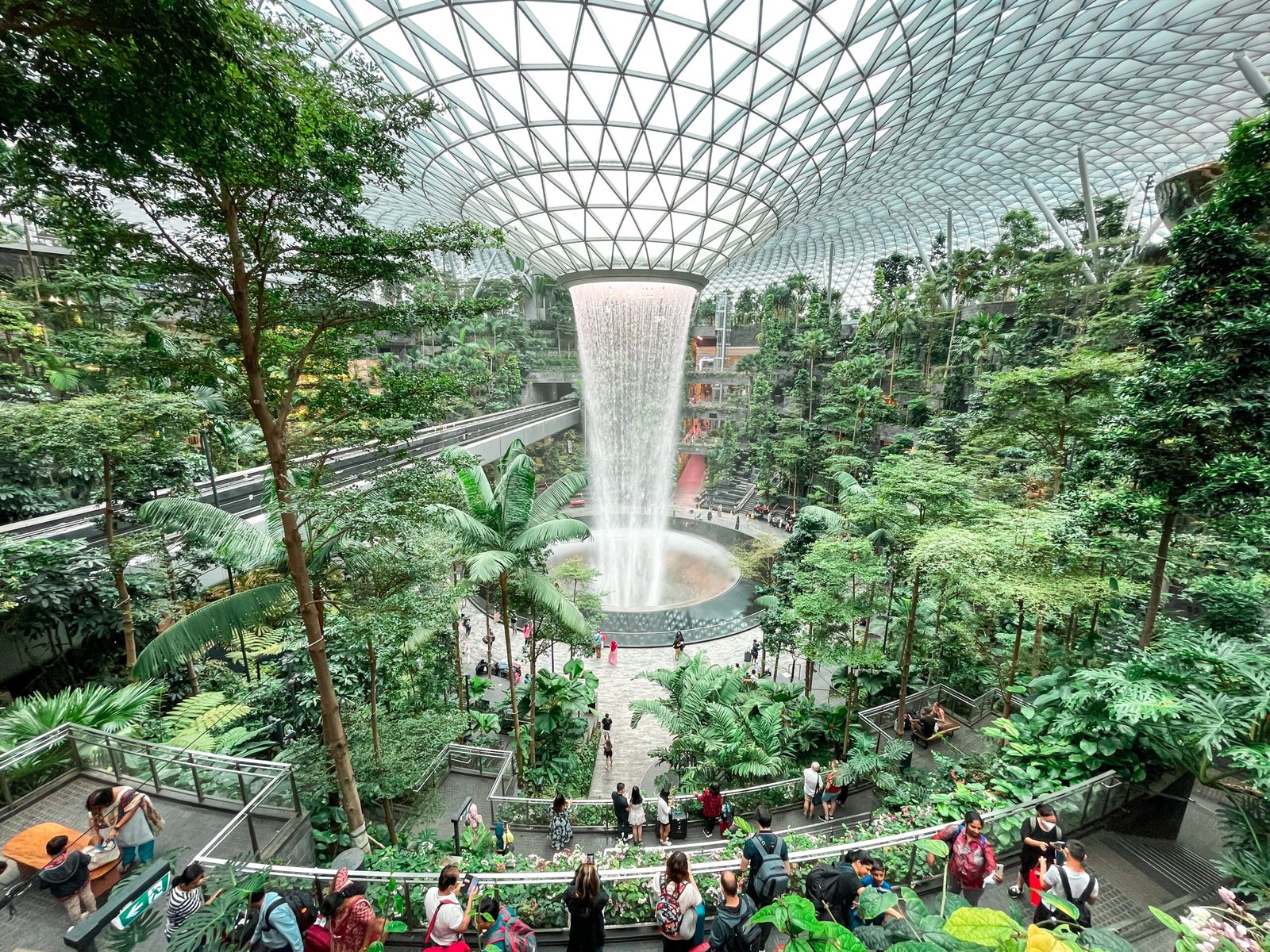
The fastest and most economical way to reach the city is via the MRT. The Changi Airport MRT station is located in Terminal 2 and 3, easily accessible from all terminals (including Terminal 4 via a free shuttle bus). A ride to downtown areas like City Hall or Orchard takes approximately 40-50 minutes and costs around S$2.50. Taxis are also readily available 24/7 from outside all terminals, with fares typically ranging from S$20-S$40 depending on traffic and destination. They take about 20-30 minutes. Ride-sharing services like Grab are another popular option, offering competitive prices and convenience. For those with significant luggage or larger groups, a shared airport shuttle is also a cost-effective choice. Make sure to factor in the impressive Jewel Changi Airport, with its breathtaking Rain Vortex and lush indoor gardens, into your travel plans; it’s perfect for exploring before or after your flight.
Essential Singapore Travel Tips & Safety Advice for 2026
Singapore is renowned for its safety, cleanliness, and strict laws, making it an incredibly welcoming and secure destination for travelers. However, a few essential tips can ensure your trip is even smoother and more enjoyable in 2026.
- Stay Hydrated: The tropical climate means constant humidity and heat. Drink plenty of water and seek air-conditioned spaces frequently.
- Dress Appropriately: Light, breathable clothing is best. When visiting religious sites, be sure to cover your shoulders and knees out of respect.
- Chewing Gum Ban: Remember, chewing gum is illegal to import or sell in Singapore, with strict penalties. Don’t bring it in!
- Littering & Jaywalking: Fines for littering and jaywalking are steep. Always use designated crossings and bins.
- Connectivity: Pick up a local SIM card at Changi Airport or pre-book an eSIM for easy internet access and navigation. Most hotels and public spaces offer free Wi-Fi as well.
- Embrace the Heat: Expect heat and humidity. Plan indoor activities during the hottest parts of the day.
When it comes to safety, Singapore consistently ranks as one of the safest cities globally, with very low crime rates. You can generally feel comfortable walking around at night, even in less populated areas. However, as with any travel, it’s wise to remain aware of your surroundings, especially in crowded tourist areas, and safeguard your valuables. Overall, Singapore offers an incredibly safe and enjoyable environment for all visitors. This comprehensive Singapore travel guide aims to equip you for a worry-free adventure.
Frequently Asked Questions
What is the best time of year to visit Singapore?
The best time to visit Singapore is generally from February to April, when the weather is slightly less humid and rainfall is lower, though Singapore is hot and humid year-round. Avoid major holiday periods for fewer crowds.
How many days are ideal for a trip to Singapore?
A minimum of 4-5 days is ideal to experience Singapore’s main attractions, including Gardens by the Bay, Marina Bay Sands, Sentosa, and cultural districts. For a more relaxed pace or to explore lesser-known areas, 7 days is recommended.
Is Singapore an expensive city for tourists?
Singapore can be expensive, particularly for accommodation and alcohol. However, it’s possible to budget by utilizing efficient public transport, eating at affordable hawker centers, and enjoying numerous free attractions. Food and transport are surprisingly budget-friendly.
What are the top must-try local dishes in Singapore?
Absolutely essential dishes include Hainanese Chicken Rice, Laksa (especially Katong Laksa), Chilli Crab, Char Kway Teow, and Satay. These are best enjoyed at traditional hawker centers across the city-state.
What’s the easiest way to get around Singapore?
The easiest and most efficient way to get around Singapore is the MRT (Mass Rapid Transit) system. It’s clean, punctual, and covers almost all major attractions. An EZ-Link card or Singapore Tourist Pass makes travel smooth.
Do U.S. citizens need a visa to enter Singapore?
No, US citizens do not need a visa for tourist stays in Singapore for up to 90 days. You will need a valid passport (minimum six months validity) and proof of onward travel.
Ready to Plan Your Singapore Adventure?
Armed with this comprehensive Singapore travel guide, you’re now ready to craft an unforgettable journey to one of Southeast Asia’s most captivating destinations. From savoring world-class hawker food to marveling at futuristic gardens and navigating its incredibly efficient city, Singapore offers an unparalleled experience. Start dreaming, start planning, and get ready to discover the magic of the Lion City.
Use this Singapore travel guide guide as your reference whenever you revisit Singapore travel guide. Most readers searching for Singapore travel guide want clear next steps, and the sections above give you that Singapore travel guide roadmap. Bookmark this Singapore travel guide page so you can come back to the Singapore travel guide checklist whenever you need it. If you only remember one thing about Singapore travel guide, let it be the core Singapore travel guide takeaway from the intro. Use this Singapore travel guide guide as your reference whenever you revisit Singapore travel guide.